Popular Posts

Friday, 27 September 2019

Abominable


This review may contain spoilers!

A film with a brilliant concept that doesn't quite manage to capture that Dreamworks magic. I would give Abominable a 5.5/10.

Abominable follows Yi, a young girl who is still dealing with the grief of losing her father, and the Yeti she discovers: Everest. Together this unlikely duo must work together to get Everest home to his family in the Himalayas before he is recaptured by the villainous animal researchers hunting him down. The film very deftly handles Yi and the story around the loss of her Dad; it's a very mature storyline and presented in a manner that you can really connect with. Yi struggles to feel grief in the way she believes is normal, instead she has worked herself to the bone to afford a trip around China that her Dad had always talked about taking her on. Throughout her travels with Everest, Jin and Peng she is able to connect with this dream and her grief in what is the strongest narrative of the film. The animation used throughout has several pitfalls but there also moments in which you really feel a rise in the form presented, often in scenes where magic is being utilised or the violin is being played you can visually see more detail and a warmer colour palette. The score and soundtrack for the film is undoubtedly the true strength of this animated feature, how music was utilised as a tool for the plot to convey Yi's connection to her father was extremely moving.

Albert Tsai, who voiced Peng, is one of the funniest characters in the film; Tsai's ability to bring a ton of energy to a scene or keep some consistent gags about his character's love of basketball made for a very fun role. Tenzing Norgay Trainor, who voiced Jin, certainly came across as a little more sure of himself and arrogant at first; yet I liked seeing this role develop to become more selfless as he realised what was truly worth caring about. Tsai Chin, who voiced Nai Nai, is really fun to hear as the bossy grandmother of Yi's household; Chin manages to cut away from this role being a strict stereotype and finds a balance of authority and love that is endearing. Michelle Wong, who voiced Yi's Mother, doesn't have a huge presence in this film but certainly leaves an impression; Wong really shows the depth of sadness this family is feeling and the need to reconnect with one another that they all seem to be avoiding.

However, the best performance came from Chloe Bennet, who voiced Yi. This protagonist is such an active and inspiring character to follow throughout this adventure. Bennet does a really good job of portraying how capable and quick to action Yi is, often seeing her role get through multiple jobs/chores in a day or barrelling into danger to help Everest. Yi feels like one of the most capable characters in the cast, she is determined and at times headstrong, but she's a figure with a lot of heart and the best possible person to help this young Yeti. I really loved how Bennet depicted her character's way of processing her father's death, it felt very grounded and honest which isn't always something that works in an animated film.

Abominable shows a lot of spirit in some big scenes but a lot of the time it feels like the story we get never really seems capable of matching up to the concept. The entire premise of this young girl saving a Yeti is brilliant but you don't feel the struggle that the journey should be. Our main characters have a very easy time of achieving their ultimate goal in the narrative and any time the film might have something it really wants to say it tends to undercut itself with a weak punchline. In fact the humour used throughout this movie felt like it was meant for an entirely different film, there weren't really any jokes that were genuinely funny just very easy silly punchlines. In fact the humour seemed to be used to stretch out the run time which really hurt the pacing, gags like the whooping snake didn't really need to find their way into the film. Even the villains lost almost all of their menace because they were goofy and so bad at catching our heroes that you never felt any sense of conflict, danger or tension. Abominable had some moments in which it looked quite good but at other times the background seemed hazy and lazily inserted while the character models really lacked detail, looking like a step back from Dreamworks usual standards.

Eddie Izzard, who voiced Burnish, seems almost like an oddly sinister parody of David Attenborough at the best of times; Izzard doesn't really handle the revelation of his character not being a villain very well and it just comes across as an abrupt twist for the sake of it. Sarah Paulson and Rich Dietl, who voiced Dr. Zara and Goon Leader respectively, just come across like bumbling henchmen for the entire first act of the film; Dietl seems too goofy to be a convincing villain while Paulson's sudden switch to antagonist is jarring and does no wonders for this film.

Friday, 20 September 2019

Ad Astra


This review may contain spoilers!

This was a strange blend between science-fiction and poetry; sometimes it was absolutely beautiful and sometimes it was nonsense. I would give Ad Astra a 6.5/10.

Ad Astra is set in the near future in which the world is under threat due to electric storms created by an insane leader of a space expedition team. Now the man's son, astronaut Roy McBride, has been tasked with journeying through the galaxy in order to reach out and stop his father from dooming the human race.What really strikes you about this film is the incredible presentation of the setting; watching this vision of how space travel evolves is quite simply incredible. The evolution of space travel to involve a colonised moon and Mars is well presented, especially how the Moon is divided up into territories by different governments. This film truly feels guided by a vision held strongly by the director and that comes across in how this production has been assembled visually. The cinematography captures the feel of motion in space so fluidly; there's also such a rich vibrant colour palette utilised that outpaces a lot of films I've seen this year. The special effects are subtle and look almost effortless, thought it's very clear a great level of detail has been inserted to make every rocket, planet or asteroid belt as immersive as possible. The score is one of the crowning achievements of Ad Astra, it is an otherworldly sound that transports you far away from your cinema seat directly to the stars.

LisaGay Hamilton, John Finn and John Ortiz, who played Adjutant General Vogel, Brigadier General Stroud and Lieutenant General Rivas respectively, really draw you into the story and work well as a group to deliver exposition that could otherwise have come across as boring; it's a really tense scene and Ortiz in particular does a great job of leaving you on edge.

However, the best performance came from Donald Sutherland, who played Thomas Pruitt. This is a role that leaves you unnerved at first, he's a suspicious individual who seems to hold a lot of knowledge over the protagonist. Sutherland embodies a role that is a bit of a watchdog, he looms over Pitt's character and seems to almost taunt him with information that is forbidden him. There is a weariness to this old guard astronaut, he seems weighed down by all he's experienced which makes a fine contrast to the protagonist. Sutherland presents a very practical, seasoned company man and it's interesting to see his morals surface in the face of his health issues when he confides in the protagonist.

The problem with Ad Astra predominantly are the characters and the main overarching narrative, everything is presented in a flat tone that makes it extremely hard to connect with. As a protagonist Roy McBride isn't exceptionally interesting; he's very capable of doing his job as an astronaut but he never has a lot to him. McBride delivers a dry, monotonous voice over throughout the feature that grates against the audience and drags the pace of the film right down to a crawl. Beyond this we never get a personal connection to McBride despite it being a very personally driven story. The story itself is quite simple, a son looking for his father and attempting to understand if his father is a good or bad man. The story keeps taking you off the beaten path, showing you the surrounding world or pausing to have long moments of self-reflection that aren't especially engaging. The main storyline never really feels as urgent as it should, the relationship of the McBride's isn't anything original and just feels stale to watch. Ultimately while Ad Astra is a modern marvel in terms of direction and production the docile plot and uninspired cast of characters seriously let it down.

Brad Pitt, who played Roy McBride, presented a role who came across as flat and incapable of being a protagonist you can connect with; Pitt really feels distant to the role and at times the character feels like it was meant for a different performer. Tommy Lee Jones, who played H. Clifford McBride, has such a shallow presence considering the significance placed upon his role; Jones doesn't really seem to understand what his character is guided by which makes for a disappointing final act. Ruth Negga, who played Helen Lantos, is the epitome of a wasted performance and character; Negga shares some significant connect to Pitt's role but is shunted into the background almost as quickly as she appears. Liv Tyler, who played Eve, shouldn't even really be in this movie; Tyler's talent is wasted on a two-dimensional wife character with a subplot that feels very tacked on to the film.

Sunday, 15 September 2019

The Angry Birds Movie 2


This review may contain spoilers!

The first Angry Birds movie was made in a time when no one was looking for it; just imagine what the sequel was like... I would give The Angry Birds Movie 2 a 1.5/10.

The Angry Birds Movie 2 is the sequel to 2016's The Angry Birds Movie and once again follows Red, Chuck and Bomb along some old and new friends as they adventure to a new and mysterious island. The soundtrack for this film is without a doubt the strongest quality, using a lot of recognizable tracks or recent music to heighten the comedy in a scene or connect with the audience.

Leslie Jones, who voiced Zeta, really has fun with her 'large and in charge' persona; Jones' really has a ton of energy and finds a way to make each line entertaining. Rachel Bloom, who voiced Silver, is one of the new protagonists in this film and genuinely stands out; Bloom is a strong leading presence and tends to carry this sequel in a number of her scenes. Awkwafina, who voiced Courtney, is an actress who is quite easy to connect with; her tech savvy pig character is a heroine worth watching.

However, the best performance came from Brooklynn Prince, Genesis Tennon and Alma Varsano, who voiced Zoe, Vivi and Sam-Sam respectively. I think the reason for separating these three young performers out from any of the rest of the cast is because they actually experimented and toyed with their lines. This trio really manages to find a way to find the humour in the scenario of a scene, to the extent that there is almost always consistently a funny moment whenever we cut to the hatchling storyline. The joy about getting kids to voice kids is that you get the boundless reserves of energy and feel engaged by them because they bring that to everything they do; not something that can be said for most of the more mature actors.

Angry Birds 2 feels like a film that was made because the last one made money and so a sequel was greenlit; not because anyone attached to the project was particularly excited by the idea of making another Angry Birds film. There is little to nothing redeeming within the plot and it is a hard watch from start to finish. The protagonist of Red is still plagued by his fears of being lonely which makes the first film feel remarkably redundant. However we soon learn that we're revisiting this with Red because we're going to get a focus on a love story between him and new addition to the cast, Silver. It's one of those opposites attract scenarios and opens a gateway to a number of horrid romance scenes throughout the film. The antagonist is a jilted single mother who despises Mighty Eagle for abandoning her on their wedding day and leaving her to raise their daughter; the plot predictably turns a 180 on this and reunites this odd family. But the fact that the villain has such shallow motivations makes this whole feature feel rather bare bones. Ultimately, the film has the resemblance of a plot that takes forever to go anywhere and attempts to make up for time by inserting a focus on three young hatchlings. The hatchlings are probably my favourite part of the film but their subplot isn't important and is entirely there to make up run time. The humour in this movie falls flat on its face, I haven't seen a movie that made me so embarrassed to watch it in such a long time. Every joke is an out of date reference, or a terrible pun/play on words, or worst of all it's just the creation of a cringeworthy situation that leaves you more uncomfortable than anything else. The animation for the film hasn't really improved at all; the character designs look goofy and the setting/location design is only good when it comprises the foreground.

Jason Sudeikis, who voiced Red, really doesn't seem wildly connected with this sequel; Sudeikis doesn't push his role much in this film and you don't get a lot of range throughout. Josh Gad, who voiced Chuck, just plays up the goofy side to his character far too much; Gad just really hams his part of being the comedic relief far too much. Bill Hader, who voiced Leonard, seems as equally bored as Sudeikis to be returning to Angry Birds; Hader doesn't put a lot of himself into this role and the leader of the pigs is strikingly not funny to watch. Sterling K. Brown, who voiced Garry, is quite a generic scientist role; Brown doesn't really fit the wacky and colourful cast of characters assembled here. Tiffany Haddish, who voiced Debbie, is a frustrating sidekick to Jones' antagonist; Haddish doesn't suit playing a kid role and made it a challenge to distinguish what her role actually was until the story actually told the audience. Danny McBride, who voiced Bomb, gives one of the lousier performances; McBride plays strongly to the fact his role is presented as the big dumb lug and so you really feel he's only there to deliver a few throw away gags. Peter Dinklage, who voiced Mighty Eagle, is seriously flat and toneless compared to the rest of the cast; Dinklage's ability to work strongly alongside a star-studded cast has worked almost consistently bar voice over work.

Sunday, 8 September 2019

It: Chapter 2


This review may contain spoilers!

This film is over inflated and needed to be an hour shorter, yet in spite of this some of the charm from the original film manages to be caught. I would give It: Chapter 2 a 6/10.

It: Chapter Two is the highly anticipated sequel to 2017's It; taking place 27 years after the Losers first defeated Pennywise they must reunite to stop him once and for all. The film has a real fun sense of humour that sits strong amid this horror/supernatural thriller; the brilliant fourth-wall breaking and humour that calls back to the childhood fun we saw in the first film is great. There's also a really cathartic style to how each character deals with their trauma from their childhood, you see each of the characters become stronger and closer because of the emotional journey they go through. The cinematography throughout this film is really sharp, you get these weird creative visuals that heighten the dizzying sense of fear Pennywise creates. The score for this film is just as good as the first one, you feel entirely unnerved but more significantly you also feel like you're watching a thrill of an adventure.

James McAvoy, who played Bill Denbrough, really captured the troubled leader of the group who barrelled recklessly into danger; I was really impressed with how McAvoy played his character's eventual acceptance and forgiveness for what happened to his onscreen brother, Georgie. Isaiah Mustafa, who played Mike Hanlon, is this very resolute figure from the beginning who is determined to fight Pennywise; Mustafa really shows how long and deeply his character has lived for killing Pennywise and seeing him break when things unravel in the final confrontation was excellent. James Ransone, who played Eddie Kaspbrak, is this very erratic character who seems constantly anxious by the world around him; Ransone and Hader onscreen together were electric and played to a friendship I truly believe re-emerged after years apart. Andy Bean, who played Stanley Uris, didn't have a great deal of screen time but entirely stole the show in his scenes; Bean makes the death of Stanley a really profound point in the feature that resounds with you from beginning to end. Bill Skarsgard, who played Pennywise, showed us all that it was possible to be the creature of horror and still be an incredible source of acting in the first film; this time around he continues to test just how far he can really go to horrifying lengths. Jaeden Martell, Wyatt Oleff, Jack Dylan Grazer, Finn Wolfhard, Sophia Lillis, Chosen Jacobs and Jeremy Ray Taylor, who played Young Bill Denbrough, Young Stanley Uris, Young Eddie Kaspbrak, Young Richie Tozier, Young Beverly Marsh, Young Mike Hanlon and Young Ben Hanscom respectively, were all great to see returning in their original roles; I could talk for a while about how these young performers are the best of their age in the business at the moment but I will instead quickly mention that I'm glad Oleff got more opportunity to show audiences exactly what he can do in this film. Ryan Kiera Armstrong, who played Victoria Fuller, has this exceptional scene with Skarsgard that is probably the best Pennywise scene of the film; the pair construct a great interaction in which Pennywise manipulates Armstrong's role's own self-doubts about herself to ultimately kill her.

However, the best performance came from Bill Hader, who played Richie Tozier. This is quite frankly one of my favourite roles Hader has portrayed in recent years. The intro to Richie having grown up to become a famous comedian is absolutely perfect and Hader has the charisma to capture that. Yet it's more than that, Hader really shows how deeply his role is affected by the fear of returning to Derry. The character also gets a really interesting moment of introspection when it comes to his background and sexuality. Hader is spectacular at showing how Richie struggled with coming to grips about being gay in a very prejudiced town; but more than that he is exemplary at showing how his character has held deep feelings for one of his friends for years. The grief we see from Richie after watching Eddie die in front of him is one of the single most powerful moments in the film.

This film knew how to have some fun, which it pulled off rather well, but ultimately this movie wasn't supposed to be a comedy. The film was so bogged down with running jokes that you felt like it had lost a sense of what it was trying to achieve half the time. It 2 was shockingly long and the pacing needed some serious work throughout, but most significantly in the second act. The film even breaks down it's three act structure in a rather cringe-worthy way; the Losers have to reunite (first act), then individually collect their totems from when they first defeated Pennywise (second act) and then finally they must defeat Pennywise in a battle of wills (third act). It seems pretty cut and dry until you think about that second act and how we have to spend time with each individual member of the Losers as they collect their token. This whole treasure hunt sequence scattered with easy scares and odd Pennywise moments really sinks the film in a big way. In fact the entire reasoning behind why the Losers have to go through all this to kill Pennywise is a bit over the top in the first place; one of the characters goes to a Native American tribe in which he gains the knowledge required to confront the clown antagonist. The entire way in which the film handles defeating Pennywise is pretty laughable, having all the characters 'will' him into becoming weak didn't translate well and made for quite the dissatisfying ending. There was also a big shift in this film to focus on representation of gay characters. Normally I'd be really excited for something like that but It 2 decided to focus on most of it's gay characters through a storyline involving abuse, which was just plain uncomfortable and lazy. For some of the film the special effects looked alright but the old woman character really did not look alright at all; worse than that, the final battle with Pennywise really felt like it didn't reach its full potential due to the constant dependence on CGI to make the scene.

Jessica Chastain, who played Beverly Marsh, took what was one of the best characters from the first film and made her quite boring to watch; it was like watching all the fight go out from one of the toughest fan-favourite characters and I really had expected more. Jay Ryan, who played Ben Hanscom, worked very strongly to the love triangle subplot that existed between him, Chastain and McAvoy and I really wish he hadn't; Ryan reduced a character who really subverted expectations in the first film to a simpering lovestruck role that existed to pine after the female lead and did little else. Teach Grant, who played Henry Bowers, is one of those roles that could have been axed to save valuable screen time; watching grant go completely over the top in his portrayal of his role's insanity after making a deal with Pennywise was a hard watch. Luke Roessler, who played Dean, is meant to be one of the young victims you feel sympathetic for but it doesn't really pan out; Roessler seems very distant and disconnected from the scenes he is in which means the audience struggles to connect with him.

Monday, 2 September 2019

The Kitchen


This review may contain spoilers!

A film that often feels like it lacks direction and an ensemble cast that really doesn't do a lot to enhance the experience. I would give The Kitchen a 4/10.

The Kitchen follows the wives of three leading members of the Irish mob in 1970s Hell's Kitchen. In the film Kathy, Ruby and Claire collectively wrest control of the Irish mob after their husbands are imprisoned; from the moment they take power the question becomes if the three women can maintain the empire they have built for themselves. As a whole the film does a great job at building the setting of Hell's Kitchen and developing how the mobs function as a faction in the city. The film really develops the mob to be in both parts a force capable of doing good by the community and at other times revealing how it can descend into chaos, painting the city in blood. The soundtrack for the film actually enhances multiple scenes, I really felt like the music kept the film vibrant and alive throughout.

Melissa McCarthy, who played Kathy Brennan, gives one of the more grounded and natural progressions to her crime boss arc; McCarthy is important because she feels like the compassionate moral compass of the film and the audience tends to feel guided by her more than anyone else. Elisabeth Moss, who played Claire Walsh, was an abuse victim storyline I wasn't so sure of in the first act but who I was really drawn in by as the plot progressed; Moss has this very certain sense of direction when it came to portraying her role's 'liberation' that is really empowering and fun. James Badge Dale, who played Kevin O'Carroll, is the only husband role who actually feels like a genuine mob boss; Dale is cocky and aloof which makes him the perfect foil/obstacle for the protagonists at the beginning of the third act. Sharon Washington, who played Estelle, is this very intense mother figure for Haddish's role that sets the tough background they both grew up in very well; Washington has this unflinching, remorseless way of talking when she presents this role that teaches you just how tough a character outside of the Irish family had to be to survive in Hell's Kitchen. Lenny Venito, who played Officer Ritchie MacLeod,managed to find a nice way to bring some good humour to his role; this was a really different take on the crooked cop and the way he reacted to being pressed for information makes for a great scene.

However, the best performance came from Bill Camp, who played Alfonso Coretti. This role was probably the most genuine portrayal of a gangster that we got and it really made me excited for any scenes with Camp in them. He had a very direct manner in how he spoke, he tended towards being blunt and cutting to the chase which made for a shrewd kingpin of crime. Camp was always formally amiable to any other character before him but there was a real darkness inside of him too. It was a very subtle feeling of danger that you felt whenever there was a scene with him that really set you on edge. I like that Camp wound up becoming a dangerous ally of sorts who pushed the main protagonists into making some especially difficult choices.

The Kitchen does a great job at portraying the setting of Hell's Kitchen and generating a gritty atmosphere but the plot for this film often feels completely aimless. The time it takes for the husbands of the three protagonists to get arrested and then for the women to take power happens unbelievably quickly to the extent that you feel like they go through no trouble at all. This essentially continues for the majority of the film; our main characters are occasionally met with hard decisions or tragedy in the form of a plot twist but they never face hard actions. You watch this movie and you never feel like there is a moment when a character is truly challenged, they get what they want and they get it easy. The way this film generates plot twists to excite the viewer could have been conducted better as well; the characterisation of Ruby is all over the show because she goes from being oppressed to liberated to a nigh psychotic criminal mastermind who planned the events of the film all along. A twist should be present throughout or it should stay true to the way things have been set up but this really messed up one of the best characters the movie was offering and wasn't very impressive. The cinematography for the film isn't particularly appealing to watch, cutting between a number of very plain looking shots in very cramped set pieces. The editing for the film meant that action moved slow and the film dragged a bit by the end of the feature. The score for the whole film was dwarfed by the soundtrack, a theme that is becoming more common and means you have a lot of empty moments in the film that could have benefitted from some attention to musical detail.

Tiffany Haddish, who played Ruby O'Carroll, is a role I quite enjoyed at first but quickly grew disenchanted with as the film moved into the second act; Haddish really played up her role's developing ego and embraced the plot twist that her character was a manipulating criminal mastermind which felt really in conflict with her first act performance. Domhnall Gleeson, who played Gabriel O'Malley, is such a weak and restrained role that I was surprised an actor like Gleeson even bothered; the character is introduced very suddenly and quietly invades scenes from that moment onwards, though never managing to eclipse Moss in their shared subplot. Brian d'Arcy James, who played Jimmy Brennan, was about as far removed from good casting for a mob leader as you could get; James never seemed confident to play strongly to his role in the scenes he featured prominently in. Jeremy Bobb, who played Rob Walsh, was one of the more generic characters out of the three husbands; Bobb just walked through the basic motions of portraying an abusive husband and never gave the audience a role worth their interest. Margo Martindale, who played Helen O'Carroll, is in at least five things a year and at this point I'm wondering if she's even reading the scripts before going for the role; Martindale is about as far removed as an old Irish matriarch of the Irish Mob as you could possibly get. Common, who played Gary Silvers, feels like he is constantly being held back for the whole film; when Common's entire role is revealed to be a dirty FBI agent you feel like he was built up for the sake of the plot at the sacrifice of the character and the performance. E.J. Bonilla, who played Gonzalo Martinez, really pushes the boundaries of his character a bit; Bonilla takes this overeager FBI agent who is hungry for a bust and pushes it to the extreme which really makes the FBI subplot incredibly disinteresting. Myk Watford, who played Little Jackie Quinn, is quite an over the top first act antagonist for the main protagonists to deal with; Watford sits comfortably with every stereotype you could think of to portray his quick to anger, new to power mob boss. Wayne Duvall, who played Larry, wasn't very convincing as Melissa McCarthy's father; the truth is Duvall gave a very flat performance and the pair never had much in terms of genuine onscreen connection that marked them as father and daughter. Stephen Singer, who played Herb Kanfer, is a character that gets manipulated into an alliance with the protagonists that isn't particularly exciting to watch unfold; Singer gives such a bland performance that you are never really drawn in to the back and forth between the two parties.

Friday, 23 August 2019

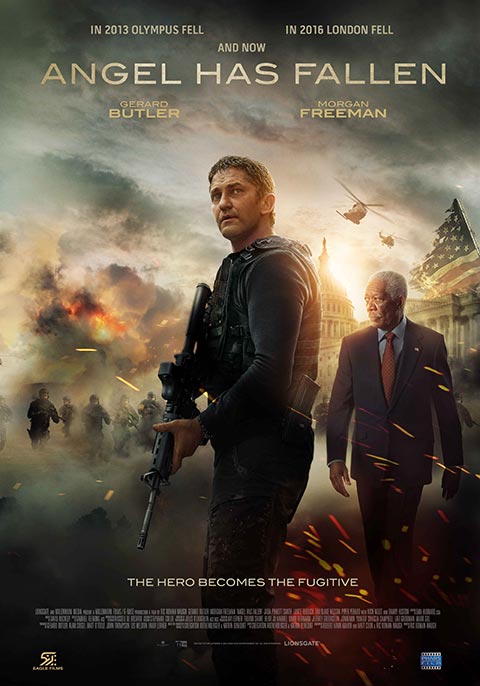
Angel Has Fallen


This review may contain spoilers!

Olympus Has Fallen was a great film but none of these sequels have justified being made. I would give Angel Has Fallen a 3.5/10.

Angel Has Fallen is the third film in the series and follows Mike Banning, a Secret Services agent who is framed for an attempted assassination attempt on the President of the United States. The entire feature revolves around his desperate mission to clear his name before the true terrorists catch up both him and the President. While I have little to say on the plot itself the film does manage to execute some sharp moments, such as the initial execution of the antagonists' plan or the intensity from Banning as he attempts to stay one step ahead of the FBI and terrorist element.

Gerard Butler, who played Mike Banning, has done good work as this protagonist for a while now and continues to keep the role consistent; Butler really embodies the unswerving loyalty and dedication that is at the heart of this role. Jada Pinkett Smith, who played Agent Thompson, was such a cool new character that could really have escalated the action somewhat; Smith had such a tough, uncompromising presence that you felt she was a force to be reckoned with in any scene she was in. Tim Blake Nelson, who played Vice President Kirby, was not the antagonist I expected to really like but he certainly stood out to me in this film; Nelson took his career politician and made a seriously duplicitous snake out of him.

However, the best performance came from Nick Nolte, who played Clay Banning. This film really suffered from such a dry story that didn't even seem particularly interested in what it was saying. Then Nolte hit the screen and I was surprised at just how things started to liven up. As a character Clay Banning is really a bit manic, he has a deep running sense of paranoia and spouts a number of conspiracy theories throughout the feature. I really enjoyed how much fun Nolte had with this, getting worked up and taking out scores of mercenaries in a manner you don't really expect. More than that watching the dynamic as he tries to move away from reluctant father to a present one, becoming an actual member of the Banning family is pretty heartwarming to watch.

This film just does not care about its own story and it showed from start to finish. There's a lot here to unpack so I'll just do my best to break down the significant elements at play. The entire film revolves around a concept that is hard to swallow after the last two films, depicting Banning as a 'traitor' is a hard sell at best and the plot is constantly inventing reasons for him to remain a fugitive that don't always work well. Another element of this film is that Banning's health has deteriorated since the second film and he's not telling anyone. Now this is a big point of issue for a lot of reasons but my big one is this; I think storylines that hinge on a character not communicating with other characters as a matter of pride or because it's convenient for others not to know is a lazy story, always has been and always will be. To make matters worse Banning's health is depicted as really bad in the first act of the film so that we really understand it, but after that they only show it when it's convenient in the second act and it's not really discussed much at all in the third. The entire political landscape that leads to the antagonist, the vice president, taking over and attempting to change policy in an extreme way is quite over the top; and worse even when the plan has been exposed by the FBI the antagonists decide they're still going through with the plan because 'they got a job to finish'. From start to finish this film is tying itself in knots trying to make something stick and make sense, all the while you can't help feeling bored by the generic action plot emerging that bears little resemblance to the excellence that was Olympus Has Fallen. The cinematography in this film was shocking to say the least, there were a number of close ups used in scenes that didn't really demand them that were framed really uncomfortably. The special effects for the film looked like something a direct to DVD film could muster, with a major building collapse looking like as much work was done as the budget could allow and a rooftop fight scene at the end that had some of the worst green screen backing I've seen in a while. The score for the film is a grim droning that is meant to make us feel the ever present danger but for me just became trifling back ground noise that had very little work put into it.

Piper Perabo, who played Leah Banning, is one of the most forgettable roles in the film; Perabo just has little chemistry with Butler and she only really fills the role of damsel in distress which became boring quickly. Morgan Freeman, who played Allan Trumbull, just didn't have the same interesting dynamic as Eckhart did with the President role; Freeman is constantly giving little speeches that feel very empty and meaningless and don't serve as moments of inspiration or guidance as they should. Danny Huston, who played Wade Jennings, seems pretty tired of playing the same boring military man antagonist as I am of watching it; Huston gives such a confused performance in this film playing more to his role's obsession/friendship with Banning than any other aspect of his role which really just doesn't play out well. Lance Reddick, who played Secret Services Director David Gentry, gives a pretty listless performance of a generic security agent; Reddick's role just feels like a role written to be a shallow clone of Banning and you never really feel like Reddick makes the role his own.

Monday, 19 August 2019

Once Upon A Time In Hollywood


This review may contain spoilers!

This is a step back in the right direction for Tarantino but certainly not one of the instant classics he used to craft. I would give Once Upon A Time In Hollywood a 7/10.

Once Upon A Time In Hollywood follows Rick Dalton, an actor who fears his career is waning and his stuntman, Cliff Booth, as they navigate Hollywood life throughout the 50s and 60s. I think the truly clever qualities of this film emerged in Rick Dalton's storyline; his intense self-doubt and constant introspection made him a struggling actor who was genuinely interesting to watch. It was quite fascinating to see him transition from being right on the brink to standing out impressively in Lancer and making something of himself in Italian Westerns.This film ultimately comes to life when it works to make the audience experience the period of time that they are watching; to really immerse you in the experience. Tarantino transports you to a time in Hollywood that feels divided at a number of times yet revels in the promis and splendour of the film industry. The cinematography used throughout is a testament to the seasoned director, there's never a moment where you feel precise thought has been skimped on for how a given scene should look. The editing for this film is also incredibly smooth despite the slower pace of the narrative, transitions move with deliberate intent and the visual side of storytelling is nothing if not satisfying. The score for the film is a very fun blend between some of the projects and references scattered throughout the film and a more deliberate haunting style for the scenes that require a build in tension.

Brad Pitt, who played Cliff Booth, is one of the most loyal and moral characters of this film; Pitt moves through this feature with a stoic, good-natured energy but you know he can turn into an action powerhouse at a moments notice. Timothy Olyphant, who played James Stacy, is quite fun as the young up and coming actor to counterbalance DiCaprio's Dalton; Olyphant has a very gracious way of presenting an optimistic and likeable protagonist. Julia Butters, who played Trudi, is an absolutely hilarious goldmine of a character; Butters straight to the point role has an encyclopaedic knowledge about the acting profession and it leads to some brilliant scenes. Al Pacino, who played Marvin Schwarz, is such a thrill to watch as an onscreen producer and active cinephile; Pacino is a gateway to the joy of watching and experiencing film in this feature. Damon Herriman, who played Charles Manson, is eerily good as the famed cult leader; Herriman manages to make you feel immediately charmed by his character while at the same time leaving you feeling uneasy.

However, the best performance came from Leonardo DiCaprio, who played Rick Dalton. There is little surprise in watching a DiCaprio film and being completely won over by his ability to perform and display an extraordinary range of emotion. As Rick you get a more comedic portrayal in some respects; watching DiCaprio portray a man struggling within his own career and currently peaking by playing the antagonist in TV shows is a fun juxtaposition in and of itself. The qualities DiCaprio gave this character like his nervous, stammering tone or intense self-doubt are elements of the role that really worked and defined him when he wasn't playing to a character. Some of the best scenes of the film comprise of watching DiCaprio ooze menace as this murderous, backstabbing Western villain and then drop the facade to reveal this reedy, insecure performer who doubts himself at every turn. This one was a little more unconventional for DiCaprio but it worked a treat and had me highly amused.

This film is not going to be what a lot of people were expecting it to be, it's certainly a satisfying piece of cinema but it never goes the full mile to pull out all the stops. Tarantino opts to make a slow paced film that runs close enough to three hours long for you to start getting a little impatient in that third act. My opinion of a run time is that you shouldn't ever really have to care about it as long as a film has earned the time it has played for; and this certainly didn't leave me convinced. The movie dragged it's legs in the first and second act, trying to impress you with the culture and setting but nver returning to the plot quickly enough. This movie is riddled with easter eggs, references or scenes that cut away to provide little anecdotal moments which really does nothing but clog up the film. Ultimately the film felt almost like a slice of life/period film that Tarantino was more experimenting with rose-coloured glasses, it was a nostalgic trip pleasantly presented but lacking the desired impact. The way the film ended felt like it was pulling it's punches a lot too, the whole home invasion confrontation almost felt as if it had been pulled from a completely different movie.

Margot Robbie, who played Sharon Tate, is beyond a shadow of a doubt better than what this film gave her; I think Robbie spoke just under twenty lines all up and had such a vacant empty role to work with. Emile Hirsch, who played Jay Sebring, was this wonderstruck fanboy at the end of the film which really didn't seem to go in hand with the character he was playing; Hirsch and Robbie had zero chemistry onscreen too which made their affair boring to watch. Margaret Qualley, who played Pussycat, gave a performance that went about as far over the top as it got in this film; Qualley seemed incapable of finding a manner in which to ground her role and so took her out beyond the realms of belief. Mike Moh, who played Bruce Lee, is one of the most controversial roles in this film and was not done well in my opinion; a very shallow representation of Lee and Moh was not the best pick to flesh him out. Damian Lewis and Rafal Zawierucha, who played Steve McQueen and Roman Polanski respectively, are essentially treated as background set pieces; Zawierucha's relationship with Robbie could at the very least have been given some more substance than it ever was. Kurt Russell and Zoe Bell, who played Randy and Janet respectively, give the most boring performances in what is already one of the weakest scenes of the film; Bell in particular is all over the place and the weakest link in this cast.