Popular Posts

Friday, 21 September 2018

Johnny English Strikes Again


This review may contain spoilers!

I have to say, this is probably my favourite Johnny English film yet. I would give Johnny English Strikes Again a 7/10.

Something that has really surprised me about the back half of this year is just how good comedy films are to watch again, films like Tag and The Happytime Murders have already impressed and now the third Johnny English film comes along staving off any semblance of sequel-itis. The strength of these spy comedies is the real slapstick, quirky nature behind the main protagonist, he's completely captivating to watch and manages to find a new shtick in each new scene. This is a film in which comedic timing is perfect, punchlines are set up clearly and each major skit-like scene has the audience doubled up laughing. The cinematography is the best it has ever looked in a Johnny English film, using dynamic camerawork for high pursuit chases or exquisite establishing shots of settings where confrontation shall occur. The score manages to maintain the light tone well, yet the real strength is the soundtrack with one of the best scenes in the film utilising Darude's 'Sandstorm' extremely well.

Emma Thompson, who played the Prime Minister, gives a hilarious Theresa May-esque parody in this film; her tirades around inaction and a desperate need to be near alcohol make for a rather entertaining political figure. Olga Kurylenko, who played Ophelia, does an amazing job at presenting this lethal spy alongside Atkinson's extremely bumbling one; Kurylenko presents a character who is cool under pressure and has the capacity to be extremely deadly. Ben Miller, who played Bough, is a truly welcome returning role; Miller was missed in Johnny English Reborn and it's nice to see him return with such strong chemistry alongside his onscreen partner. Michael Gambon, Edward Fox and Charles Dance, who played Former MI-7 Agents respectively, are a really nice unexpected cameo; this is a scene of immense acting talent presenting a sense of decorum that contrasts nicely with Atkinson's English.

However, the best performance came from Rowan Atkinson, who played the title role of Johnny English. It's no great shock that Atkinson shines throughout he has in all the other films up to this point. Where it really stems from is just how much he attempts with the role, always trying a new gag or piece of physical comedy. Atkinson is just so purposeful and expressive in how he performs, there's never a point where the comedy feels lewd or crass because he's just so natural at making humour feel clear and effortless. This is one of those nice roles where he has to be shown as exceptionally serious while doing things the audience can perceive to be silly, a contrast Atkinson has to a fine art at this point.

This film completely nails every aspect that makes it a comedy, there are non-stop laughs at most every turn. The problem comes when you take the time to focus upon the plot. Throughout the antagonist proclaims how much he loves 'data', all while spouting some technical jargon that never really makes any sense. His big plan? To shut off the internet and hold the world hostage as a result. Not only is this such a played out plot but as we've seen in the past the screenwriter just doesn't have the knowledge to be writing anything like that. The result is something just over the top and nonsensical, it's a step down from the moments of clever comedic wit shown throughout. The special effects for the film aren't amazing either, a lot of the green screen settings feel imposed and the submarine missile launch scene (while hilarious) feels quite superficial because the film suddenly relies on such a significant technical element.

Jake Lacy, who played Jason, has had a rough run so far this year; his antagonist in Rampage was less than successful and now his portrayal of a tech mogul who never really seems fully convinced with what he's talking about is quite the let down too. Adam James, who played Pegasus, is the first excessively bland portrayal of Pegasus we've had in a Johnny English film; James just pushes exposition and a dry tone often falling to the background in scenes with Miller, Atkinson and Thompson.

Thursday, 13 September 2018

The Predator


This review may contain spoilers!

Admittedly the Predator films have generally been more miss than hit but this feature is certainly carrying the flag for worst Predator film yet. I would give The Predator a 3/10.

This film has fairly engaging action scenes, moments where intensity can suddenly break out and you're briefly diverted from the weak plot into a mindless joy ride of gunfire and explosions. Something that this film manages to strangely craft for itself is an entertaining tone; you find yourself laughing at a weak line of dialogue or comedic beat because the film roots itself so heavily in this jovial atmosphere. This is certainly a lighter version of the Predator which doesn't necessarily work but it certainly crafts the tone well. The special effects look great in two major scenes; the opening scene and near the end of the final act. This is because a significant amount of the work that went into the effects of this film is in the alien spacecraft; making for some interesting visuals and set pieces alike.

Jacob Tremblay, who played Rory McKenna, has fast come to fame as one of the most talented young performers in Hollywood and that stays consistent here; while the plot behind this child with Aspergers is flakey there's certainly no getting away from the stunning work Tremblay does in depicting the mannerisms and vulnerability of his role.

However, the best performance came from Trevante Rhodes, who played Nebraska Williams. From the start you soon get the feeling that you're going to like Rhodes in his role; you also get the impression he is going to be woefully underused. This performance is entertaining because this character is so laidback and resigned to his fate of imprisonment and sentence of 'insanity'. Yet what sets Rhodes apart is how he slowly begins to reveal his character and the motivations behind him as the film progresses. Seeing this role so low and lost, filled with regret over not being able to finish the job or not being able to be the person he could've been is a great subplot to observe. The world-weary yet charismatic soldier Rhodes gives us is every bit more fascinating than Holbrook as the protagonist, someone should let the casting director know.

This film is a very messy thing to watch. From the beginning we are thrown into this big conflict between two Predators and given little context as to what we're seeing; this wouldn't be so bad if we weren't then introduced to four different main protagonists, three separate important plot devices and one unnamed alien investigating organisation that never gets explored much outside of the fact that it's 'government'. Feeling a little overwhelmed? Well, then you're getting a good sense of the film already. As the film progresses we get a scatter-bomb of weird developments that just don't make a lot of sense: really lowbrow or poorly written dialogue, a very unnecessary nude scene, a bunch of unlikeable side characters and a betrayal from the unnamed government organisation (big shock!). In the second act the film takes a weird twist and becomes more like an old family film; the main child protagonist comes into prominence, there are alien dogs who become somewhat domesticated and alien creatures explode into goop that looks like something out of the Nickelodeon Kids Choice Awards. The final act all rounds out with a pretty underwhelming final fight and the revelation of some weirdly Iron Man looking Predator armour that goes beyond tacky. The cinematography is horrible for an action film, often poorly framed and not setting up anything appealing or dynamic. The special effects aren't so great when the focus isn't on the spaceships, the Predator creatures don't look very good, the invisibility design looks somehow worse than any film that has come before and the alien dogs feel like something that should have been left on the cutting room floor. The score that feels beat for beat like a copy of the score from the original Predator film seems to beg us to attribute nostalgia to what we're viewing, but ultimately it's like watching a poorly half-completed jigsaw puzzle with pieces from about five different boxes.

Boyd Holbrook, who played Quinn McKenna, should never have been cast in a leading role; Holbrook's drawling tone and casual approach to performance make him boring and repetitive to watch. Keegan Michael-Key, Thomas Jane, Alfie Allen and Augusto Aguilera, who played Coyle, Baxley, Lynch and Nettles respectively, is a unique idea for a group of side characters in theory but in practice these were a set of personalities reading bad dialogue who did not match up with one another at all; reasonable from someone like Aguilera who hasn't left much of a mark onscreen yet but I expected a lot more from the rest. Olivia Munn, who played Casey Bracket, never really feels like a scientist and doesn't seem to present the background to her character very well; Munn has a habit of being a bland addition to an action feature but it's a shame to see her have so much screen time in this one. Sterling K. Brown, who played Traeger, doesn't seem to know what sort of role he's playing; at times we get the brutally serious government agent yet sometimes this can fall aside to an almost maniacal, macho hothead. Yvonne Strahovski, who played Emily, is that necessary bridge between Tremblay and Holbrook but unfortunately fails to connect with either of them; Strahovski feels a bit tacked on at times and even her 'big speech' scene has no punch to it.

Friday, 7 September 2018

The Nun


This review may contain spoilers!

They took the scariest part of The Conjuring 2 and made it relatively not scary to watch in its own film. I would give The Nun a 5.5/10.

This feature does a great job when it functions as a dark fantasy, exploring an ancient demonic threat and laying out the adventure needed to counter the threat. The Nun crafts an interesting history around how the Catholic Church confronts supernatural entities, and in particular shows how Valak came to find a means of entering the material world. Throughout there are some exquisite establishing shots that capture the rich setting; there is also a sense of constant motion through cinematography which allows many scares to be set up.

Ingrid Bisu, who played Sister Oana, is a very earnest role who is driven by a need to drive out the darkness; Bisu really deftly evolves her earnest desire to help into a developing anxiety and fear for the evil that stalks the abbey. Gabrielle Downey, who played The Abbess, is surprisingly more frightening than her nun counterpart; Downey instils a sense of dread for events to come and her delivery is classic horror film.

However, the best performance came from Demian Bichir, who played Father Burke. Bichir has an incredible sense of gravitas when it comes to this role; you sense that there's a history to him and that he has seen some absolutely horrific sights. The steady resolution that stems from Father Burke makes him an interesting protagonist for a horror feature, he seems ready to confront threats of the supernatural which is what makes these Conjuring universe films so interesting. Bichir is extremely good-natured, sharing some great on-screen chemistry with his co-stars. Ultimately, this is an incredibly unique heroic figure who perfectly suits the horror scene.

The problem with this film is that it doesn't really know what it wants to be, often toeing the line between horror and dark fantasy. The two genres borrow from one another quite distinctly yet when the film starts feeling more like an adventure than a group of protagonists being terrorised by an entity you know you've lost your horror qualities. The film delivers in-depth exposition about this supernatural history between the Church and demons but fails to build up a sense of dread within the plot. The entire second act is devoted to a litany of jump scares or horror scenes but never takes the time to explore the plot further or establish motives for the antagonist. When the film takes a turn to hunt the threat rather than surviving it you get the sense things have lost their way and this can't be made any clearer than the overly sweet happy ending and loose connection back to the Conjuring films. The antagonist isn't very well explored considering she's the title character; she has several moments that seem to conflict with her role in Conjuring 2 and watching her attempt to banter with one of the protagonists is a fairly cringeworthy third act development. The editing for the film is pitifully slow, even when there's a need for quicker moments in the scary scenes. Worse than this there's a multitude of poor production moments; such as the obvious smoke machine fog or the way make-up has been applied to the main antagonist and zombie nuns. The score comes off as generic and cheesy, while the soundtrack is barely there, offering up a morsel to give this film some semblance of a time period setting.

Taissa Farmiga, who played Sister Irene, gives a very soft performance; you don't always follow her motivations or drive to remain in the scenario she is in. Jonas Bloquet, who played Frenchie, is an ill-fitting role for a horror film; Bloquet plays a suave action hero capable of banter but this can really draw you out of a scene that is doing it's best to be scary.

Wednesday, 5 September 2018

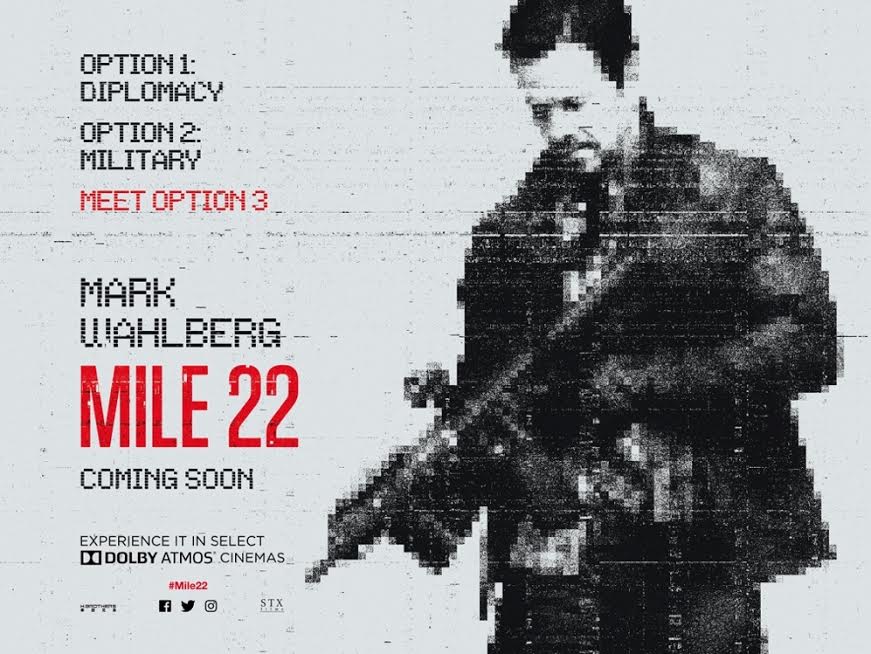
Mile 22


This review may contain spoilers!

You put Peter Berg and Mark Wahlberg together and you get cinematic magic almost every time. I would give Mile 22 an 8.5/10.

This is really leading the charge as one of the strongest thrillers I've seen so far this year; every time I thought I could expect a direction the narrative would take I would be pleasantly surprised by a well-established twist. The strength of a film like this is how solidly recognisable it is: a gritty glimpse into an American black ops team and the missions they run on foreign and domestic soil. At first, this team seems bulletproof, cool and clear-cut American heroes, albeit a few moral grey areas here and there. Yet as they embark upon the mission this film centres around we see that even the best stumble; even as some of the heroes fall we hold onto hope and the ending this feature provides is nothing short of exemplary. The cinematography really plays around with different angles and shots to construct a very chaotic picture, you see moments of a scene from views you would never have dreamed of with daring framing to top it off. The editing complements this sense of deliberate chaos, cutting at an unpredictable pace and setting some transitions that really move the action forward perfectly. The score for the feature is akin to something out of a modern wasteland, a hollow bass that rings out over the action and emboldens the melancholy scenes most of all.

Lauren Cohan, who played Alice Kerr, is an extremely violent and foul-mouthed operative; Cohan's great strength is she shows her role's deep connection to others so strongly, no other performer shows such great on-screen chemistry with the wide range of cast members outside of Wahlberg. John Malkovich, who played Bishop, comes into this film as an almost relaxed 'holier-than-thou' eye in the sky; Malkovich takes a character who wields supreme tactical power and grounds them, making them a likeable role we connect with almost instantly. Ronda Rousey, who played Sam Snow, is a performance I feel is going to surprise a lot of people; Rousey certainly plays a soldier who is comparable to a sledgehammer but more significantly the way she portrays a fear of death in her final scenes is one of the better moments in the entire feature. Sam Medina, who played Axel, is a brilliant antagonist set against the protagonist in this film; Medina has an entertaining way of playing of Wahlberg that makes their scenes together extremely intense.

However, the best performance came from Mark Wahlberg, who played James Silva. Wahlberg has just been outdoing himself with his roles in most films in the past few years but this one is certainly his stand out performance for 2018. The character of Silva has a stony, eerily calm approach to combat and conflict when first he's introduced; this is the stone cold American soldier we've seen in films before. Yet Wahlberg flips that perception on us almost immediately, unveiling a frantic operator whose thoughts race at a million miles a minute and whose every line drips with exasperation. This wouldn't be a Wahlberg role if the character wasn't capable of great displays of wit, showing a comradely sense of humour with his team. Silva is a menacing, intimidating protagonist; and when all is said and done Wahlberg takes this stone cold role and shows the compassion within as he diverts from the mission to save Cohan's role, Alice. A brilliant character and performance, one I would watch again and again.

The film follows a pretty simple formula which isn't surprising but does make this a little simple to watch in places. The entire premise being to move from point A to point B means that we can see how the plot has to start and end can fairly accurately reason out where issues may arise along the way. Furthermore, the final minutes of the film take away from what could have a very powerful ending by teasing more to come, the result isn't as poignant because we are teased that the battle isn't done; a message which seems counterintuitive to how events have played out.

Iko Uwais, who played Li Noor, is a significantly important plot point but a rather boring character to watch; Uwais doesn't show this character to be anything other than a bag of cool looking fighting tricks and minimal substance. Carlo Alban, who played William Douglas III, is the weak link of the main black ops team; his place in the team is never really explored and Alban feels tacked on to make up numbers. Natasha Goubskaya and Nikolai Nikolaeff, who played Vera and Aleksander respectively, are important as the main antagonists but don't have a lot of presence in the film; these are roles you would forget if the film didn't clip in their faces every fifteen or so minutes. Terry Kinney, who played Johnny Porter, is one of the drier political roles; Kinney doesn't really hold his own in the aggressive scenes he shares with Wahlberg, making for a rather impotent role.

Friday, 31 August 2018

The Happytime Murders


This review may contain spoilers!

I really went into this expecting the crude comedy the trailers had shown, yet I was pleasantly surprised to be entertained with an original take on a comedic film noir. I would give The Happytime Murders a 7.5/10.

The Happytime Murders takes us into a world in which humans and puppets live side by side, yet puppets certainly get the short end of the stick as their often harassed and tormented for the goofy, soft exterior. In this strange yet familiar society, we come to realise that it bears a remarkable resemblance to our own, right down to some of the violent revenge-driven crime that takes place throughout the feature. As puppets start dropping like rag dolls the protagonist, a puppet private investigator known as Phil Philips, races against time and teams up with his former human partner to take down the serial killer behind the killings. This narrative is so unique and fun to watch, there's such attention paid to the construction of the world and the interesting relationships that exist in this film. At the same time, Happytime Murders goes right by capturing that light-hearted energy and approach to comedy that works so spectacularly in Muppets shows and films. The whole thing plays well to a fairly strong plot and sense of humour while hitting all the right notes and tropes of a gritty film noir.  The cinematography is rather dynamic for a film that relies so heavily on puppets, you can see the careful construction and care that goes into making this film an engaging action-comedy. The score had that hard edge noir films often use which worked wonders for the tone, while the soundtrack was an entertaining medley of comedic tracks.

Melissa McCarthy, who played Detective Connie Edwards, was a strong foul-mouthed partner to the film's protagonist; McCarthy really led an interesting role who struggled with addiction and navigated the crooked streets of her city with ease. Elizabeth Banks, who played Jenny, may haven't been given the best end for her role but in spite of this really stood out for most of the feature; Banks' role had a passionate connection with the protagonist and you could feel deep chemistry there ( which is no small feat when half that partnership is a puppet). Maya Rudolph, who played Bubbles, is this very likeable, sweet secretary character; the way Rudolph styles her persona to be so wholesome and good makes her stand out in a positive light. Leslie David Baker, who played Lt. Banning, has a begrudging respect for McCarthy and Barretta's roles which makes for an interesting dynamic; Baker's optimistic outlook towards the future really moves the plot ever-forward to that final endpoint needed. Joel McHale, who played Agent Campbell, has the overzealous tough persona needed for this higher echelon of law enforcement; yet the way McHale plays to his character's moments of awkwardness and confusion makes for several moments of light comedy too. Kevin Clash, who played Lyle, entered the narrative as a cool no-nonsense gang boss; yet his easy-going manner made him a likeable, friendly character.

However, the best performance came from Bill Barretta, who played Phil Philips. This role has a very dour outlook on life when first we meet him, he sees the world through shades of grey and it's hard to disagree. The world of Phil Philips is bleak and it's not an easy one for a puppet. Barretta does a great job of showing the kindness of the role that dwells underneath his hard exterior. The character of Phil is often pushing an indifferent, dispassionate front; yet as the film develops it becomes clear just how driven he is by a need for justice and a desire to protect those closest to him. The moral dilemma Barretta takes his role through right up till the end standoff is an interesting one and one that makes for a truly great protagonist.

the film stumbles most when it takes to muck around with crude comedy, for the most part, this is handled well enough but it does saturate the feature at times. The necessity for such content isn't really there, the purpose just seems to be to shock the viewer, which is counter-productive to the strong narrative at play here. The final act also slips a bit as everything builds to the climax; the most glaring problem being the return of Jenny near the final moments of the film; the death of this role was an excellent scene and the choice of this twist was very jarring. The editing for the film was also quite slow and didn't attempt any interesting transitions; clearly, the film was limited by the types of shot needed with filming puppets but it had the negative consequence of affecting pacing.

Dorien Davies, who played Sandra, didn't make for a great antagonist; her very obvious exploitative nature and playing heavily on the 'black widow' trope from the outset didn't leave much room for any surprises. Victor Yerrid, who played Larry, really hams up this role a bit; you don't spend enough time with the character to empathise with him nor is there any brotherly chemistry between him and Barretta. Drew Massey, who played Goofer, is probably the most over the top performance of the film; this character just pushes the crude sense of humour a bit far and creates one of the more uncomfortable scenes to watch.

Thursday, 23 August 2018

The Darkest Minds


This review may contain spoilers!

The young adult dystopian films died out a couple of years back now, the creators of this feature clearly didn't get the memo. I would give The Darkest Minds a 1/10.

This is a film that starts strong; we're treated to a horrible opening in which young children are dying of sickness and the need for a quarantined, military state arises within the United States. This brutal setting is fairly interesting and you want to see how the main protagonist is going to navigate such a warped reality at first. The special effects are also nothing to scoff at, making some of the key action scenes stand out through the use of vivid eye effects or the design of the 'Reds'.

Bradley Whitford, who played President Gray, makes quite the impression for only having two scenes; Whitford delivers a passionate speech that connects on a very human level and is a significant element for the strong opening. Miya Cech, who played Zu, is really the heart of the film in a lot of ways; without any dialogue, Cech uses her incredible facial expressions and body language to convey a young child on the run.

However, the best performance came from Skylan Brooks, who played Chubs. If Miya Cech is the proverbial heart of the film then Skylan Brooks is the soul; anything character-driven that interests the audience will often stem from this performance. In many ways, Brooks carries a lot of this film to the end. Chubs is a very particular character, one who doesn't trust easily and who is extremely observant. Brooks has a very grounded manner and responds to situations in quite a realistic manner, making this a role that is very easy to engage with. Not to mention it's just plain nice to have a role with a sense of humour, one who can genuinely make you laugh in amongst the bog of bad dialogue.

A few years ago I was watching films that had been adapted from young adult dystopian novels begin to worsen as a genre; the Divergent films never found their feet after the first one and The 5th Wave was an absolute nightmare. The genre seemed dead. Then someone decided to make this mess of a film and it was hard to believe something worse than what had come before had come to pass. This feature sets up a horrid setting then spends most of the time avoiding it or making it cheesier through corny antagonists. At every turn there was a need to force out exposition and tell the audience member every little detail; so there were no surprises in store and it wasn't long until one grew bored. I struggled with the main protagonist's conflict; early in the film she erases herself from her parents' memories, rather poorly explained away as a 'defence mechanism'. What then transpires is a story in which a girl is cut off from her parents and attempts to get back to them, yet it's all glaringly convenient and hard to empathise with. Undoubtedly the worst aspect of the film is just how much it dedicates itself to a bland romance between two protagonists who have very little chemistry with one another; the fact this develops into a poorly written triangle in the third act is a serious flaw and doesn't do anything to spice up the weak narrative. The cinematography is very poor for an action-oriented film like this; the epic moments look constructed and any of the moments in between are very lazily framed. The score for this film is quite a generic blockbuster fanfare, while the soundtrack doesn't provide this film with character either; opting instead to provide a selection of the latest pop songs or up and coming musicians.

Amandla Stenberg, who played Ruby, doesn't make for a strong leading protagonist; she fails to show an emotional range and the inner conflict she faces isn't presented well throughout the feature. Mandy Moore and Mark O'Brien, who played Cate and Rob Meadows respectively, are very poorly placed minor roles that fade in and out of this story at an inconsistent rate; Moore, in particular, is hard to watch, delivering a spew of exposition in almost every scene. Harris Dickinson, who played Liam, has the acting talent of a brick; not only does Dickinson have no chemistry with Stenberg but he comes across as uncomfortably awkward and creepy. Gwendoline Christie, who played Lady Jane, is just one of those over the top nonsensical antagonists that always seem to find their way into these young adult films; Christie has done better than this but has seen some terrible roles come her way lately. Patrick Gibson, who played Clancy Gray, practically relies on his character introduction, turning point and development all happening in the final act; this is a rushed performance one that Gibson doesn't manage successfully. Wade Williams, who played The Captain, is quite a generic military antagonist; he plays quite safely to a stereotype and never finds a way to make his role feel unique. Lidya Jewett, who played Young Ruby, is one of those child actors who is restricted by the range of their ability at a young age; Jewett is incredibly obvious in how she plays her role and this is very much a two-dimensional introduction to the leading role. Carson Holmes, who played Leader Kid, is a very cringe-worthy character that is introduced near the end of the second act; Holmes doesn't fit the tough role he is given to play and feels seriously miscast the entire time. 

Friday, 10 August 2018

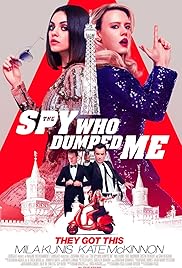
The Spy Who Dumped Me


This review may contain spoilers!

This is an action comedy that doesn't really understand how to balance action and comedy in the same narrative. I would The Spy Who Dumped Me a 4/10.

The film shines strongly as a comedy when it gets quite absurd, having characters who act and speak quite randomly is hilarious and sometimes unpredictable touch. The camerawork throughout does a pretty good job, most notably the key action sequences look exceptionally polished and sharp. The fight choreography is surprisingly good for an action comedy, the action moves at a fast pace and often goes for showy stuntwork over realism or brutality.

Lolly Adefope, who played Tess, is a very funny minor character; Adefope has a very low-key way of portraying a snarky friend. Kev Adams, who played Bitteauto Driver Lukas, is a very insane role who turns the chase sequence scene into one of the more iconic in the film; Adams turns a very recognisable ordinary role into a frantic, manic performance over the course of a couple of minutes. Jane Curtin and Paul Reiser, who played Carol and Arnie respectively, are hysterically unexpected roles; the way this pair emulate and shine delivering the type of humour we see from McKinnon is great. Tom Stourton, who played Edward Snowden, is another one of those roles you just don't really expect from this film; Stourton playing an awkward, lovestruck Snowden is a curveball performance that absolutely lands.

However, the best performance came from Kate McKinnon, who played Morgan. I've always found McKinnon to be a strong comedic presence in most features she's in, and this feature is no exception. In this role, you get a lot of hilarious and absurd dialogue that is completely random and often quite a surprise. McKinnon pitches this fiercely loyal friend who is very zany but full of heart. Without McKinnon's clever line delivery and ludicrous wit, this film wouldn't have had much charm at all.

This film holds aspects of an action comedy and even markets itself as such, yet in execution, this genre really fails to work for the film. At any point where the film tries to take its own narrative too seriously, the pace slows and you find yourself losing interest. Likewise, the cast of the film is clearly not dominated by comedic performers and most comedic writing falls flat because of this. The extended main story about Audrey's love life and her being self-confident before finding another relationship is quite stale and doesn't do anything unique. The entire plot has several contradictions and sacrifices a consistent, well-reasoned plot to attempt some convoluted twists that just leave more questions than answers. The editing is very slow for an action comedy, which is a shame considering the reasonably nice cinematography; as a result, the pacing is greatly affected. The score for the film is generic fanfare for the action sequences, while the soundtrack for the film is a range of dull and unappealing hits (something even the characters point out).

Justin Theroux, who played Drew, seems disinterested in his own role; he has no chemistry with Kunis and you don't really buy into the backstory that they had a one-year relationship. Mila Kunis, who played Audrey, is a terrible leading performer who doesn't present her character's main conflict strongly at all; Kunis on;y fuels a dull main narrative and leaves the lion's share of the comedy work to McKinnon. Dustin Demri-Burns, who played Viktor, is quite a crude minor antagonist at the beginning of the feature; this type of character just lowers the bar and sets a tone for the type of comedy film to expect. Sam Heughan, who played Sebastian, has a very dry style of acting; he doesn't express a great deal of emotion in his role and you don't sense a connection develop between him and Kunis at all. Hasan Minhaj, who played Duffer, is pushed onto the audience as a type of 'funny' antagonist which has quite the opposite effect; Minhaj isn't a subtle performer and it comes as no shock that he reveals himself as a 'surprise' antagonist. Gillian Anderson, who played Wendy, doesn't rise above a very stereotypical portrayal of an intelligence agency leader; Anderson is completely wasted throughout this film delivering dialogue in an extremely stiff manner. Ivanna Sakhno, who played Nadedja, is a straight-up perturbing antagonist; Sakhno is playing a role that is weird and doesn't fit comfortably into a film like this. Fred Melamed, who played Roger, is another creepy antagonist who comes across as a bit much; Melamed really goes quite over the top with his performance and is yet another accessory in this film with too many antagonists. James Fleet and Carolyn Pickles, who played Tom and Marsha respectively, are just plain unnecessary roles by the time they are introduced; they deliver sinister in a way that hams things up and they never make their roles feel significant.