Popular Posts

Friday, 31 August 2018

The Happytime Murders


This review may contain spoilers!

I really went into this expecting the crude comedy the trailers had shown, yet I was pleasantly surprised to be entertained with an original take on a comedic film noir. I would give The Happytime Murders a 7.5/10.

The Happytime Murders takes us into a world in which humans and puppets live side by side, yet puppets certainly get the short end of the stick as their often harassed and tormented for the goofy, soft exterior. In this strange yet familiar society, we come to realise that it bears a remarkable resemblance to our own, right down to some of the violent revenge-driven crime that takes place throughout the feature. As puppets start dropping like rag dolls the protagonist, a puppet private investigator known as Phil Philips, races against time and teams up with his former human partner to take down the serial killer behind the killings. This narrative is so unique and fun to watch, there's such attention paid to the construction of the world and the interesting relationships that exist in this film. At the same time, Happytime Murders goes right by capturing that light-hearted energy and approach to comedy that works so spectacularly in Muppets shows and films. The whole thing plays well to a fairly strong plot and sense of humour while hitting all the right notes and tropes of a gritty film noir.  The cinematography is rather dynamic for a film that relies so heavily on puppets, you can see the careful construction and care that goes into making this film an engaging action-comedy. The score had that hard edge noir films often use which worked wonders for the tone, while the soundtrack was an entertaining medley of comedic tracks.

Melissa McCarthy, who played Detective Connie Edwards, was a strong foul-mouthed partner to the film's protagonist; McCarthy really led an interesting role who struggled with addiction and navigated the crooked streets of her city with ease. Elizabeth Banks, who played Jenny, may haven't been given the best end for her role but in spite of this really stood out for most of the feature; Banks' role had a passionate connection with the protagonist and you could feel deep chemistry there ( which is no small feat when half that partnership is a puppet). Maya Rudolph, who played Bubbles, is this very likeable, sweet secretary character; the way Rudolph styles her persona to be so wholesome and good makes her stand out in a positive light. Leslie David Baker, who played Lt. Banning, has a begrudging respect for McCarthy and Barretta's roles which makes for an interesting dynamic; Baker's optimistic outlook towards the future really moves the plot ever-forward to that final endpoint needed. Joel McHale, who played Agent Campbell, has the overzealous tough persona needed for this higher echelon of law enforcement; yet the way McHale plays to his character's moments of awkwardness and confusion makes for several moments of light comedy too. Kevin Clash, who played Lyle, entered the narrative as a cool no-nonsense gang boss; yet his easy-going manner made him a likeable, friendly character.

However, the best performance came from Bill Barretta, who played Phil Philips. This role has a very dour outlook on life when first we meet him, he sees the world through shades of grey and it's hard to disagree. The world of Phil Philips is bleak and it's not an easy one for a puppet. Barretta does a great job of showing the kindness of the role that dwells underneath his hard exterior. The character of Phil is often pushing an indifferent, dispassionate front; yet as the film develops it becomes clear just how driven he is by a need for justice and a desire to protect those closest to him. The moral dilemma Barretta takes his role through right up till the end standoff is an interesting one and one that makes for a truly great protagonist.

the film stumbles most when it takes to muck around with crude comedy, for the most part, this is handled well enough but it does saturate the feature at times. The necessity for such content isn't really there, the purpose just seems to be to shock the viewer, which is counter-productive to the strong narrative at play here. The final act also slips a bit as everything builds to the climax; the most glaring problem being the return of Jenny near the final moments of the film; the death of this role was an excellent scene and the choice of this twist was very jarring. The editing for the film was also quite slow and didn't attempt any interesting transitions; clearly, the film was limited by the types of shot needed with filming puppets but it had the negative consequence of affecting pacing.

Dorien Davies, who played Sandra, didn't make for a great antagonist; her very obvious exploitative nature and playing heavily on the 'black widow' trope from the outset didn't leave much room for any surprises. Victor Yerrid, who played Larry, really hams up this role a bit; you don't spend enough time with the character to empathise with him nor is there any brotherly chemistry between him and Barretta. Drew Massey, who played Goofer, is probably the most over the top performance of the film; this character just pushes the crude sense of humour a bit far and creates one of the more uncomfortable scenes to watch.

Thursday, 23 August 2018

The Darkest Minds


This review may contain spoilers!

The young adult dystopian films died out a couple of years back now, the creators of this feature clearly didn't get the memo. I would give The Darkest Minds a 1/10.

This is a film that starts strong; we're treated to a horrible opening in which young children are dying of sickness and the need for a quarantined, military state arises within the United States. This brutal setting is fairly interesting and you want to see how the main protagonist is going to navigate such a warped reality at first. The special effects are also nothing to scoff at, making some of the key action scenes stand out through the use of vivid eye effects or the design of the 'Reds'.

Bradley Whitford, who played President Gray, makes quite the impression for only having two scenes; Whitford delivers a passionate speech that connects on a very human level and is a significant element for the strong opening. Miya Cech, who played Zu, is really the heart of the film in a lot of ways; without any dialogue, Cech uses her incredible facial expressions and body language to convey a young child on the run.

However, the best performance came from Skylan Brooks, who played Chubs. If Miya Cech is the proverbial heart of the film then Skylan Brooks is the soul; anything character-driven that interests the audience will often stem from this performance. In many ways, Brooks carries a lot of this film to the end. Chubs is a very particular character, one who doesn't trust easily and who is extremely observant. Brooks has a very grounded manner and responds to situations in quite a realistic manner, making this a role that is very easy to engage with. Not to mention it's just plain nice to have a role with a sense of humour, one who can genuinely make you laugh in amongst the bog of bad dialogue.

A few years ago I was watching films that had been adapted from young adult dystopian novels begin to worsen as a genre; the Divergent films never found their feet after the first one and The 5th Wave was an absolute nightmare. The genre seemed dead. Then someone decided to make this mess of a film and it was hard to believe something worse than what had come before had come to pass. This feature sets up a horrid setting then spends most of the time avoiding it or making it cheesier through corny antagonists. At every turn there was a need to force out exposition and tell the audience member every little detail; so there were no surprises in store and it wasn't long until one grew bored. I struggled with the main protagonist's conflict; early in the film she erases herself from her parents' memories, rather poorly explained away as a 'defence mechanism'. What then transpires is a story in which a girl is cut off from her parents and attempts to get back to them, yet it's all glaringly convenient and hard to empathise with. Undoubtedly the worst aspect of the film is just how much it dedicates itself to a bland romance between two protagonists who have very little chemistry with one another; the fact this develops into a poorly written triangle in the third act is a serious flaw and doesn't do anything to spice up the weak narrative. The cinematography is very poor for an action-oriented film like this; the epic moments look constructed and any of the moments in between are very lazily framed. The score for this film is quite a generic blockbuster fanfare, while the soundtrack doesn't provide this film with character either; opting instead to provide a selection of the latest pop songs or up and coming musicians.

Amandla Stenberg, who played Ruby, doesn't make for a strong leading protagonist; she fails to show an emotional range and the inner conflict she faces isn't presented well throughout the feature. Mandy Moore and Mark O'Brien, who played Cate and Rob Meadows respectively, are very poorly placed minor roles that fade in and out of this story at an inconsistent rate; Moore, in particular, is hard to watch, delivering a spew of exposition in almost every scene. Harris Dickinson, who played Liam, has the acting talent of a brick; not only does Dickinson have no chemistry with Stenberg but he comes across as uncomfortably awkward and creepy. Gwendoline Christie, who played Lady Jane, is just one of those over the top nonsensical antagonists that always seem to find their way into these young adult films; Christie has done better than this but has seen some terrible roles come her way lately. Patrick Gibson, who played Clancy Gray, practically relies on his character introduction, turning point and development all happening in the final act; this is a rushed performance one that Gibson doesn't manage successfully. Wade Williams, who played The Captain, is quite a generic military antagonist; he plays quite safely to a stereotype and never finds a way to make his role feel unique. Lidya Jewett, who played Young Ruby, is one of those child actors who is restricted by the range of their ability at a young age; Jewett is incredibly obvious in how she plays her role and this is very much a two-dimensional introduction to the leading role. Carson Holmes, who played Leader Kid, is a very cringe-worthy character that is introduced near the end of the second act; Holmes doesn't fit the tough role he is given to play and feels seriously miscast the entire time. 

Friday, 10 August 2018

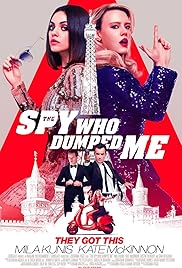
The Spy Who Dumped Me


This review may contain spoilers!

This is an action comedy that doesn't really understand how to balance action and comedy in the same narrative. I would The Spy Who Dumped Me a 4/10.

The film shines strongly as a comedy when it gets quite absurd, having characters who act and speak quite randomly is hilarious and sometimes unpredictable touch. The camerawork throughout does a pretty good job, most notably the key action sequences look exceptionally polished and sharp. The fight choreography is surprisingly good for an action comedy, the action moves at a fast pace and often goes for showy stuntwork over realism or brutality.

Lolly Adefope, who played Tess, is a very funny minor character; Adefope has a very low-key way of portraying a snarky friend. Kev Adams, who played Bitteauto Driver Lukas, is a very insane role who turns the chase sequence scene into one of the more iconic in the film; Adams turns a very recognisable ordinary role into a frantic, manic performance over the course of a couple of minutes. Jane Curtin and Paul Reiser, who played Carol and Arnie respectively, are hysterically unexpected roles; the way this pair emulate and shine delivering the type of humour we see from McKinnon is great. Tom Stourton, who played Edward Snowden, is another one of those roles you just don't really expect from this film; Stourton playing an awkward, lovestruck Snowden is a curveball performance that absolutely lands.

However, the best performance came from Kate McKinnon, who played Morgan. I've always found McKinnon to be a strong comedic presence in most features she's in, and this feature is no exception. In this role, you get a lot of hilarious and absurd dialogue that is completely random and often quite a surprise. McKinnon pitches this fiercely loyal friend who is very zany but full of heart. Without McKinnon's clever line delivery and ludicrous wit, this film wouldn't have had much charm at all.

This film holds aspects of an action comedy and even markets itself as such, yet in execution, this genre really fails to work for the film. At any point where the film tries to take its own narrative too seriously, the pace slows and you find yourself losing interest. Likewise, the cast of the film is clearly not dominated by comedic performers and most comedic writing falls flat because of this. The extended main story about Audrey's love life and her being self-confident before finding another relationship is quite stale and doesn't do anything unique. The entire plot has several contradictions and sacrifices a consistent, well-reasoned plot to attempt some convoluted twists that just leave more questions than answers. The editing is very slow for an action comedy, which is a shame considering the reasonably nice cinematography; as a result, the pacing is greatly affected. The score for the film is generic fanfare for the action sequences, while the soundtrack for the film is a range of dull and unappealing hits (something even the characters point out).

Justin Theroux, who played Drew, seems disinterested in his own role; he has no chemistry with Kunis and you don't really buy into the backstory that they had a one-year relationship. Mila Kunis, who played Audrey, is a terrible leading performer who doesn't present her character's main conflict strongly at all; Kunis on;y fuels a dull main narrative and leaves the lion's share of the comedy work to McKinnon. Dustin Demri-Burns, who played Viktor, is quite a crude minor antagonist at the beginning of the feature; this type of character just lowers the bar and sets a tone for the type of comedy film to expect. Sam Heughan, who played Sebastian, has a very dry style of acting; he doesn't express a great deal of emotion in his role and you don't sense a connection develop between him and Kunis at all. Hasan Minhaj, who played Duffer, is pushed onto the audience as a type of 'funny' antagonist which has quite the opposite effect; Minhaj isn't a subtle performer and it comes as no shock that he reveals himself as a 'surprise' antagonist. Gillian Anderson, who played Wendy, doesn't rise above a very stereotypical portrayal of an intelligence agency leader; Anderson is completely wasted throughout this film delivering dialogue in an extremely stiff manner. Ivanna Sakhno, who played Nadedja, is a straight-up perturbing antagonist; Sakhno is playing a role that is weird and doesn't fit comfortably into a film like this. Fred Melamed, who played Roger, is another creepy antagonist who comes across as a bit much; Melamed really goes quite over the top with his performance and is yet another accessory in this film with too many antagonists. James Fleet and Carolyn Pickles, who played Tom and Marsha respectively, are just plain unnecessary roles by the time they are introduced; they deliver sinister in a way that hams things up and they never make their roles feel significant.

Monday, 6 August 2018

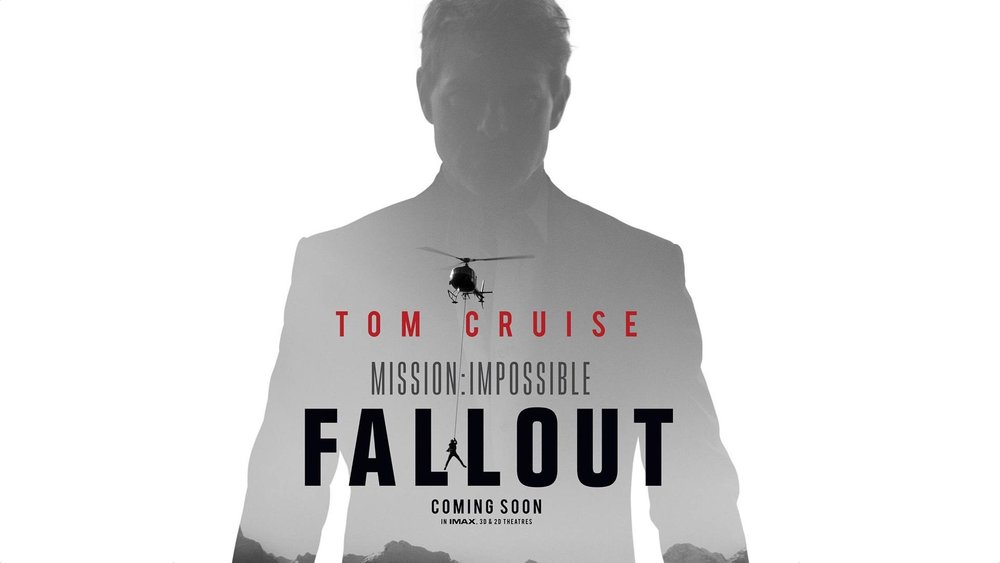
Mission: Impossible - Fallout


This review may contain spoilers!

Of all the action film series Mission Impossible is probably the one to most consistently deliver; Fallout is certainly no different. I would give Mission: Impossible - Fallout an 8/10.

This is a really well-made sequel, it balances quite an introspective theme for the narrative and the protagonist. The entirety of Fallout is spent posing a response to the consequences of Rogue Nation and Mission: Impossible III; how has Hunt distancing himself from Julia and keeping his most significant antagonist, Solomon Lane, affected his life and how can the decisions he has made in the past come back to haunt him? The feature follows Hunt, who is tormented by nightmares of Lane enacting vengeance upon him. It's a more vulnerable depiction of the character, similar to how he was in the third Mission Impossible and it certainly makes how he responds to the events of this film interesting to watch. This series balances a great light-hearted tone with tense, monolithic action sequences and Fallout goes to great lengths to keep topping our expectations.

Visually, this is probably the most impressive Mission Impossible feature to date. There's an impressive display of symmetry from the camera making this a smooth and well-crafted film to watch. The editing goes to great lengths to complement this, timing moments of comedy well or heightening dramatic reveals with the way a scene is cut together. The score for the Mission Impossible films are iconic for a reason and this one is no different from the rest, the traditional theme upping the ante in several key moments.

Ving Rhames, who played Luther Stickell, is the heart of these films in a lot of ways; Rhames does a great job in depicting the friendship that exists between his role and Cruise's and through this you can see the years of tough experiences they've lasted together. Simon Pegg, who played Benji Dunn, can generate some nice comedic dialogue and knows how to bring the film to a more light-hearted tone; seeing Pegg assist Cruise throughout chase scenes or daring moments of action is one of the highlights of this character. Rebecca Ferguson, who played Ilsa Faust, presents an agent torn between her better interests and her need to survive extremely well; Ferguson has a very natural presence in these films and fits into the main cast extremely well. Sean Harris, who played Solomon Lane, is one of the best antagonists Mission Impossible has ever seen; Harris has a quiet way of presenting terrible wrath that makes him an extremely dangerous role. Angela Bassett, who played Erica Sloan, has the cold, stern manner of an intelligence agency leader; Bassett flips between an open, negotiating manner to a hostile persona in a snap which makes for an interesting role. Vanessa Kirby, who played White Widow, is a very two-faced role who has a kind appearance but boasts a darker side; Kirby builds up a dispassionate criminal who is merciless in her profession. Michelle Monaghan, who played Julia Meade-Hunt, is a welcome return to the Mission Impossible series; Monaghan's chemistry with Rhames is immediately re-established and leads to some very heartfelt scenes. Wes Bentley, who played Patrick, is fairly entertaining as the clueless husband; Bentley's earnest performance is quite funny in juxtaposition with the scenes he is in. Alec Baldwin, who played Alan Hunley, Baldwin takes the time to have a lot more fun in this feature which is a welcome sight; Baldwin's connection to the main cast is very strong and his departure really makes an impact on the rest of the film. Kristoffer Joner, who played Nils Debruuk, is another interesting minor antagonist; Joner plays quite a depraved role who maniacally celebrates at his supposed victory over the IMS team.

However, the best performance came from Tom Cruise, who played Ethan Hunt. Cruise plays his famous character in a manner that is quite interesting to watch this time around; Ethan is notably more trapped in his own mind. There is an underlying arc for this character that shows how tortured he is by the decisions he has made in the past and a lot of this film is guided by the character reacting to his own fears. I think its great how introspective Cruise gets with this storyline, he holds a mirror up to his role and exposes all the weaknesses. This is a great Mission Impossible film, though not my favourite it has some of the best acting from Cruise in the series to date.

This film suffers significantly from a distinct lack of an interesting major antagonist; Walker has a tendency to play to a very obvious narrative and he feels like a glorified henchman to Solomon Lane, who really should have played a stronger role. The integration of Julia was an awkward aspect as well, the pained revisitation from Hunt's past is clunky and awkwardly handled. The presence of a romantic sub-plot doesn't necessarily play strongly into this film but the inclusion of Julia should've been handled with greater grace than it was.

Henry Cavill, who played August Walker, gives a very wooden performance throughout the feature; Cavill doesn't strike a strong leading antagonist and is often eclipsed by the rest of the cast, particularly Harris.

Wednesday, 25 July 2018

The Equalizer 2


This review may contain spoilers!

Denzel Washington is a masterclass of acting, and watching him come back to this role is a dream for fans of the action genre. I would give The Equalizer 2 an 8/10.

I was nervous about this film initially when I saw the trailers focused on Robert McCall losing someone close to him; it felt generic and a bit obvious for a sequel. Yet this film takes strides to be original with this concept, crafting a second act that holds quite a creative investigation and a tense third act that works well as the culmination of a murky revenge-thriller. The real draw for this film is Robert McCall, a protagonist who immerses himself deeply within the community and goes to great lengths to protect it. The sub-plot around Miles helping McCall remove graffiti, stay in school and paint the apartment walls is a very progressive mentor narrative and lends fascinating insight into the leading role.

The film is shot very well, making use of framing and movement within the shot to create multiple tense moments and capture action exquisitely. The fight choreography used in the film looks great; there has been a big demand in action sequences for gritty and realistic looking action at the moment. Equalizer 2 looks so good because the fights feel fluid; often the assailants have that gritty and rugged fight style to them, while McCall glides through combatants like a butcher carving fine cuts.

Pedro Pascal, who played Dave York, is quite a different antagonist from what we saw in the first feature; Pascal presents a more efficient operative who is a surprising villain given his grounded suburban demeanour. Ashton Sanders, who played Miles Whittaker, goes through an impressive display of character development in this film; Sanders' initially presents a naive role who doesn't really take much ownership of his responsibilities, yet throughout the narrative, he transitions away from a life of crime to a more positive future. Orson Bean, who played Sam Rubenstein, is a very kind man who has great chemistry with Washington; Bean's presentation of his role's determination to reunite with a portrait of his lost sister is one of the more touching sub-plots of the film. Adam Karst, who played Turkish Father, is a great minor antagonist to start the film with; he presents a threatening criminal figure who doesn't fully comprehend the danger he is inviting which leads to an impressive opening scene.

However, the best performance came from leading actor: Denzel Washington, who played Robert McCall. Watching Washington is often like watching a masterclass in acting I find; even in some of his lesser films he really knows how to lend himself to a character. The role of McCall is extremely likeable, he has this open charisma to him that makes him feel like this quiet pillar within his community. Yet there is a point where that role switches to the dangerous operative/assassin that we all come to watch and it's fascinating because this transition isn't like other action heroes. Washington transitions from his amiable character to a man fuelled sometimes by rage, but often by this blank resolve to eradicate a target or a threat. This character is an impressive persona and in another performer's hands might just feel like a generic action movie role, but in Washington's, you can't help but be fascinated.

Equalizer 2 plays out as a great sequel with some very well-crafted characters and sub-plots; however, it often feels like there wasn't enough main narrative to make the film required. The first act is almost entirely composed of sub-plot or introspective character moments, only ever really culminating into the main story by the end of the act. From there audiences have to be prepared for a very slow burn feature, the pacing takes its time and this feature isn't overstuffed with action but rather contemplative revenge. This film also does a great job of building tension and suspense yet in many of the fight sequences (especially the final fight) Robert McCall feels untouchable, so the lead protagonist never seems to face any real danger that actually threatens him. Most disappointing was the lack of a compelling score for the film; Zack Hemsey had provided some terrific music for the first feature and most notably missing from this film was a distinct sound.

Bill Pullman, who played Brian Plummer, just feels like a role that should have been given to an extra or a less experienced actor; Pullman just plays the wallflower for the entire film and you have to wonder what he's even doing there. Melissa Leo, who played Susan Plummer, was dull to watch in the first Equalizer and she's equally as tiring this time around; her character is really just set up to be killed off and the bland nature of the role means you don't really feel much as an audience member.

Friday, 20 July 2018

Sicario: Day Of The Soldado


This review may contain spoilers!

I thought for sure that without Emily Blunt this sequel would fail to impress, but it actually manages to surpass all expectations quite easily. I would give Sicario: Day Of The Soldado an 8.5/10.

The magic of the Sicario films is that they immerse you in a world much darker, bloodier and cruel than our own; a war on drugs and terror where there is no room for a moral conscience and the rules of engagement are tossed out the window pretty fast. I liked how this film divided the action up a lot more, focusing on America's approach to sowing the seeds of war amongst its enemies and also spending reasonable time showing the smuggling operations of the Mexican drug cartels through the eyes of a young initiate. Sicario: Day of the Soldado takes extreme measures and has plenty of scenes in which violence is taken to a very dark place; however, I find it interesting that this film rekindles some degree of morality within the leading protagonists: Alejandro and Matt. This journey back to some semblance of moral reasoning within the shadowed theatre of war reasons out an optimistic return to principled combat and engagement, an outcome that may never occur but that we hope for nonetheless.

I love how the Sicario films are shot; the empty depth of the surroundings, isolating these lone instruments of war is fascinating, or the manner the camera seems to glide through moments in which shadow operatives storm a compound. The editing is something I'm really pleased to see has stepped up from the last film, taking cues on when to transition almost flawlessly and making this a seamless film to watch visually. The score of the feature has you on your seat throughout, you'll be drawn in and when the tempo steadily rises and the horns hit you'll feel the sense of danger about to explode in the coming scene.

Benicio Del Toro, who played Alejandro, continues to standout incredibly in these films; Del Toro has such a gentle, good presence considering his role's affinity for killing. Josh Brolin, who played Matt Graver, has such an indifferent approach to the violence he creates; Brolin's role is like an attack dog being pointed at a target to bring carnage wherever he goes. Manuel Garcia-Rulfo, who played Gallo, is a fantastic antagonist in this film; he has a warm charisma towards his young initiates but is capable of heightening a scene to a vicious point of murder quite suddenly. Shea Whigham, who played Andy Wheeldon, has nice professional chemistry with Brolin in their scene together; I was really impressed by the casual attitude and subtle demeanour through which this pair construct their bargaining scene. Elijah Rodriguez, who played Miguel Hernandez, doesn't say much over the course of the feature yet still makes a huge impact; Rodriguez brings out a character who falls deeper and deeper into the underworld, making some incredibly bold choices for survival and money. David Castaneda, who played Hector, is an interesting and manipulative role; this is a well-portrayed gang enforcer who does a great job at turning Rodriguez's Miguel down a very dark path. Bruno Bichir, who played Angel, is an inspired role who appears near the end of the second act; Bichir's deaf role has some apprehension towards Del Toro and the manner in which they come to terms is probably one of the best scenes in the film.

However, the best performance came from Isabela Moner, who played Isabel Reyes. In amongst this incredible mature cast of award-winning performers, this young actress really shines. This character when introduced is quite nasty, a mean fighter and capable of manipulating the adults around her through intimidation. Moner often reminds the audience how young this role is, showing the terror and panic she faces when being kidnapped or taken Garcia-Rulfo's Gallo. However, what I really loved is that this young performer lends her character such a mature intuition; she is more than capable of observing and responding to suspicious situations quite adeptly. Moner is fast up and coming in the features she stars in and I'm looking forward to seeing where her career takes her next.

The real problem for this film is the ending, the 'death' scene of Alejandro is a pretty major moment of poor writing. Watching this character get shot through the head and surviving stretches the belief a fair bit and makes the final moments of the feature hard to follow. They clearly wanted to raise the stakes for the characters but this wasn't a great choice and grated pretty majorly against the realistic depiction of modern warfare these films tend to strive for. The pacing also suffered a lot, a problem that has persisted from the original. Both features tend to escalate the action but then find long periods where there is a significant lull, enough to slow the narrative down a bit.

Jeffrey Donovan, who played Steve Forsing, has really dropped his game since the original Sicario; Donovan doesn't deliver dialogue as well as he had nor did he have the presence to make himself heard in scenes he shared with Brolin and Del Toro. Catherine Keener and Matthew Modine, who played Cynthia Foards and James Riley respectively, are such dry, bland roles compared to the rest of the cast; Keener just comes across as tired and lacking energy in her portrayal. Raoul Max Trujillo, who played Rafael, is a very docile role and doesn't feel like he wields the power his role purports to; this is very much a performance where he is placed front and centre but really doesn't have the presence to keep up with Brolin.

Monday, 16 July 2018

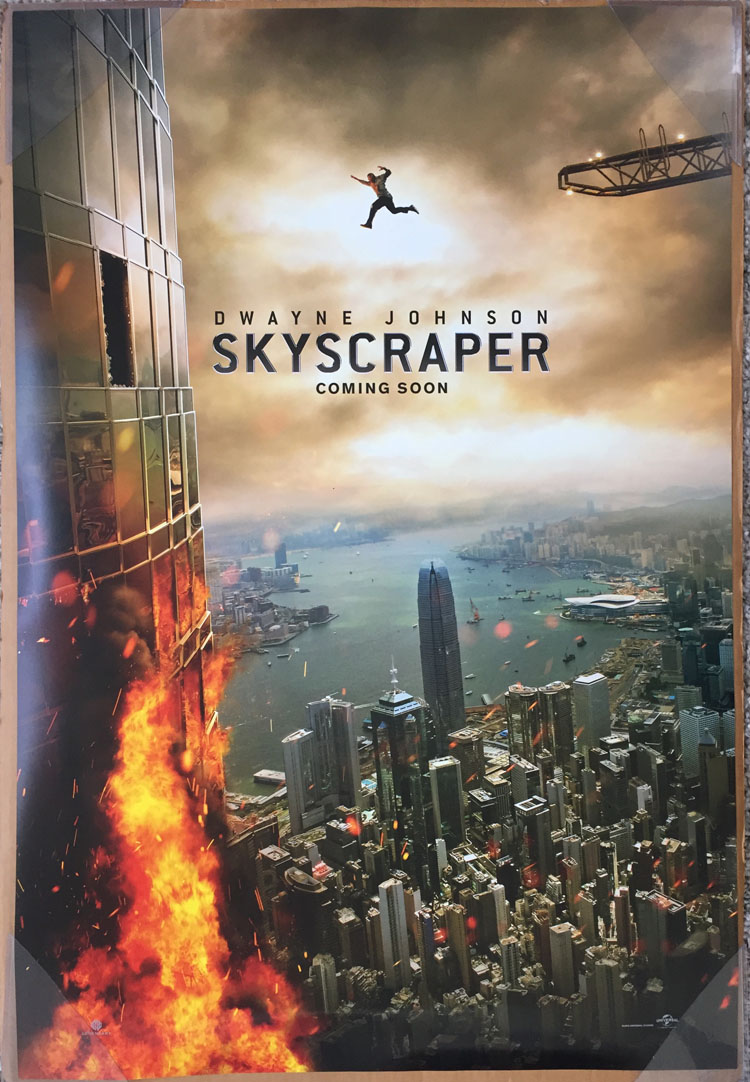
Skyscraper


This review may contain spoilers!

2018 has been a decidedly bad year for The Rock, first Rampage and now this. I would give Skyscraper a 4/10.

This is very much a generic action blockbuster film, but because of this the strength of the film definitely comes through several technical aspects of production. The cinematography used throughout the film is monolithic, capturing the scale of the setting and the extreme obstacles characters must overcome in order to survive. The fight choreography is another strong element, with the initial grapple between the characters of Will and Ben being the standout for the film. The score is another surprising strength, there is a very melancholy tone amidst the fanfare of the action sequences that sets this apart from more generic blockbuster themes; I also have to commend the song 'Walls' by Jamie N Commons that closes this film rather nicely.

Neve Campbell, who played Sarah Sawyer, has a very compelling romantic connection with Johnson onscreen which makes for a nice husband/wife dynamic; Campbell also has a responsiveness to her role that allows you to see the ex-soldier qualities her character would possess. McKenna Roberts and Noah Cottrell, who played Georgia Sawyer and Henry Sawyer respectively, have a lot of great energy and really depict the awe of being in a super-structure quite well; Cottrell, in particular, does a great job at presenting his character's struggle with asthma and bravery in the midst of such extreme danger.

However, the best performance came from the leading actor: Dwayne Johnson, who played Will Sawyer. In the first act of the film, Johnson does a fantastic job establishing the family man dynamic, his role is very gentle and even nervous at what the uncertain future may bring. What really separates this performance apart from the rest is how Johnson shows his character to not be initially combat-ready. This is a character who has to react quite hastily at first and only narrowly survives life or death encounters. However, as the film progresses and the stakes are raised Johnson ups the ante, revealing a strength and determination rekindled again within Will Sawyer.

This film has been getting compared a lot to Die Hard and the reason for that is because action features like Skyscraper have been done to death a million times before. There's something very cliche about a protagonist down on his luck or on the outside of the law suddenly being immersed back into an epic struggle. There are a number of sequences within this film that really stretch the limits of belief and are over the top just for the sake of heightening the action. The motivation of the film's antagonist doesn't make a lot of sense, especially considering the lengths he goes to in order to achieve his goal. Special effects pose another problem in this film, specifically how CGI settings don't mix in well with real performers or objects. This creates a pretty serious disparity considering the entire feature is centred around this artificial setting.

Pablo Schreiber, who played Ben, comes into the film quite suddenly and has this friend relationship with Johnson that just exists without much exploration; Schreiber's betrayal and turn to antagonist is pretty predictable and there's no real effort to make this subtle. Noah Taylor and Adrian Holmes, who played Mr Pierce and Ajani Okeke respectively, are very much background supporting roles who primarily fuel exposition; Taylor has gotten a bad habit of being typecast as villains and it's not surprising considering he always tends towards the over the top sinister portrayal. Roland Moller, who played Kores Botha, isn't a very interesting antagonist and seems violent just for violence sake; Moller seems to be the go-to casting for angry mercenary villains with little character motivation at the moment. Byron Mann, who played Inspector Wu, is Skyscraper's answer to extending the runtime; Mann's role is very inactive for most of the film and tends to pose obvious questions that the audience is already asking and aware of. Hannah Quinlivan, who played Xia, is a fairly typical henchman role; she might seem quite badass in fight sequences but her dialogue is cheesy and there's no real substance to her role. Chin Han, who played Zhao Long Ji, is quite monotonous in his delivery crafting a very dry character for the film; Han's role isn't very sympathetic or easy to connect with so it's hard to be engaged by his aspect of the storyline.