Popular Posts

Friday, 8 March 2024

Damsel


Damsel thrusts viewers into the world of Princess Elodie, betrothed to Prince Henry of the Aurea kingdom, only to uncover the dark secrets surrounding her new royal family and their sinister relationship with a formidable dragon.

What sets Damsel apart is its adept manipulation of genre expectations. While initially poised as a fantasy survival narrative with a lone protagonist, the film masterfully weaves a pervasive sense of horror throughout. From subtle visual cues to the haunting score by David Fleming, every element contributes to an atmosphere thick with foreboding. The revelation of the dragon's ability to communicate further amplifies the impending danger, setting the stage for a gripping tale of survival.

Millie Bobby Brown's portrayal of Elodie is commendable, capturing her transformation from a dutiful princess to a determined warrior. Additionally, Shohreh Aghdashloo's portrayal of the Dragon adds a chilling depth to the antagonist, enhancing every scene with a palpable sense of menace. However, it is Robin Wright's portrayal of Queen Isabelle that truly shines as the standout performance of the film. Wright's regal authority and calculated malevolence elevate the character from a mere antagonist to a formidable force to be reckoned with.

Despite its strengths, Damsel falls short in its predictability. The narrative arc follows a familiar trajectory, with few surprises along the way. Elodie's sudden prowess in combat feels inadequately explained, detracting from the film's credibility. Additionally, the lackluster world-building leaves much to be desired, with both royal families and their respective kingdoms feeling underdeveloped.

Visually, Damsel struggles to immerse viewers in its world, with CGI effects failing to impress. The reveal of the dragon is particularly disappointing, lacking the realism needed to suspend disbelief. The poorly rendered CGI creates a jarring contrast with the live-action elements, detracting from the overall viewing experience. To add insult to injury, the film's choice to close with a lackluster rendition of "Ring of Fire" feels like a missed opportunity for a memorable ending.

Ray Winstone's subdued performance as Lord Bayford further dampens the film's impact, while Angela Bassett's exaggerated portrayal as Lady Bayford feels out of place.

In conclusion, Damsel is a film with untapped potential. Despite its atmospheric tension and standout performances, it ultimately fails to deliver a truly captivating narrative or immersive visual experience. While it may satisfy fans of the genre, its shortcomings prevent it from reaching its full potential.

I would give Damsel a 4.5/10.

Thursday, 7 March 2024

Spaceman


Spaceman, a thought-provoking science-fiction drama, delves into the depths of human loneliness and the quest for connection in the vast expanse of space. The film follows Jakub, a solitary astronaut embarking on a solo mission beyond Jupiter, while back on Earth, his wife Lenka contemplates leaving him due to the emotional void their relationship has become over the years. However, the narrative takes a surprising turn when an extraterrestrial spider, Hanus, enters Jakub's spacecraft with the intent to alleviate his profound loneliness.

Contrary to the expectations often associated with Adam Sandler's films, Spaceman ventures into experimental territory, pushing the boundaries of storytelling and character exploration. The film's strength lies in its unconventional approach to depicting Jakub's journey of self-reflection and growth amidst the isolation of space. The juxtaposition of Jakub's struggles in space with Lenka's emotional turmoil on Earth adds layers of complexity to the narrative, keeping the audience engaged throughout.

One of the film's most compelling aspects is the unlikely bond formed between Jakub and Hanus. Despite the initial unease surrounding the extraterrestrial creature, Hanus emerges as a symbol of healing and companionship, guiding Jakub towards emotional maturity and reconciliation with Lenka. The dynamic between Jakub and Hanus, though initially jarring, evolves into a poignant reflection of human connection transcending cosmic boundaries.

Visually stunning, Spaceman captivates with its mesmerizing CGI effects, particularly in rendering the otherworldly presence of Hanus and the majestic vistas of space. Max Richter's haunting score enhances the film's atmospheric depth, accentuating moments of both beauty and melancholy.

Adam Sandler delivers a transformative performance as Jakub, portraying a man on the brink of emotional collapse with raw intensity and vulnerability. Carey Mulligan shines as Lenka, capturing the complexities of love, loss, and resilience amidst heartbreak. However, it is Paul Dano's voice work as Hanus that steals the show, imbuing the character with wisdom and empathy that resonate deeply with the audience.

While Spaceman's narrative occasionally falters in its pacing and focus, particularly in the first half, the core emotional arc remains compelling and resonant. The film's exploration of themes such as corporate greed and the fragility of human relationships adds depth to the story, even if some plot elements feel underdeveloped.

In conclusion, Spaceman is a transcendent sci-fi drama that delves into the existential depths of human existence, weaving a tale of loneliness, connection, and authentic love across the cosmic canvas. Despite its occasional flaws, the film's poignant message and stellar performances make it a captivating cinematic experience. 

I would rate Spaceman a solid 7.5/10.

Friday, 1 March 2024

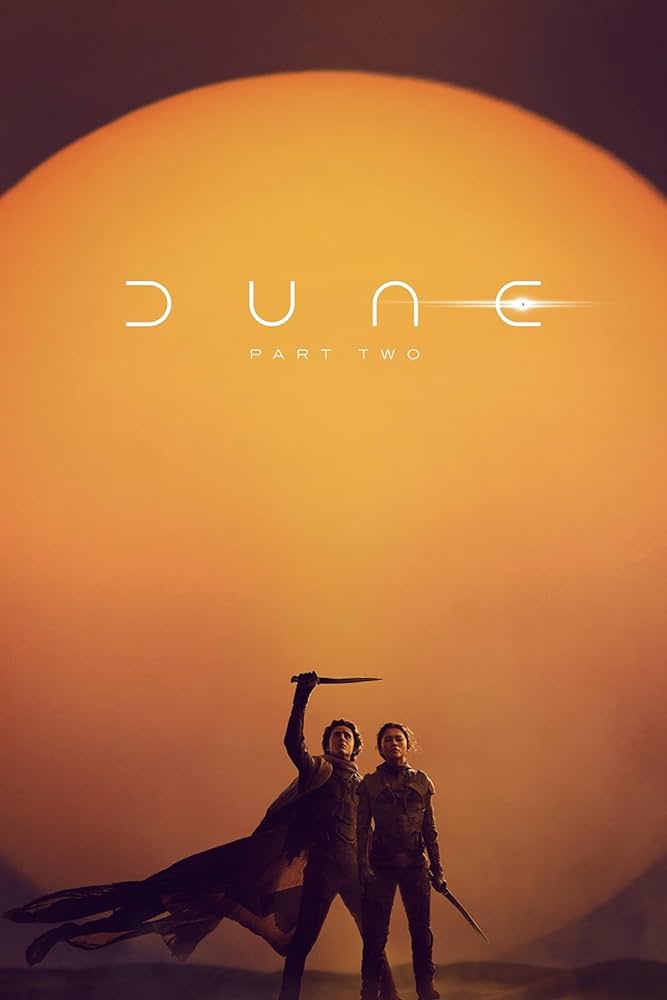
Dune: Part Two


 This review may contain spoilers!
 
Dune: Part Two is the sequel to Dune (2021) and continues with the story of how Paul Atreides survives the decimation of his House and leads an army of Fremen against the Harkonnen forces. 
 
One of my main criticisms of the first film was answered almost immediately in the first act this time around. I found there was a lot of exposition and we were fed worldbuilding; but in this act the film finally takes a punt at letting the audience experience the world of Arrakis. When Paul Atreides seeks to reject his 'Chosen One' destiny and instead wishes to learn the Fremen culture and become immersed in it we get a really intimate examination of the lifestyle of this planet. Paul becomes more resolute in the trials he seeks out and forms interesting character bonds as a part of his journey, it's a neatly packaged journey in which we the audience come to understand the Fremen culture and the world of Arrakis better through Paul's own developing worldview. I also really liked how this form of storytelling fostered a believable resistance story of native people standing strong against a foreign occupier. It also kindled a great romantic subplot between Paul and Chani that added a lot of meat to the later conflicts.
 
The visuals Denis Villeneuve has brought to the world of Dune are what makes this trip worth the price of admission. The story I can take or leave but there are whole sequences of shots, down to singular frames that are the epitome of cinematic artwork. The setting could feel so barren but instead it feels expansive, beautiful and extraterrestrial. These movies transport you entirely and they are designed perfectly to do so through their look alone. The special effects are very impressive, the ships and vehicles scattered throughout right down to the sandworms or the Harkonnen troopers gliding through the air looks entirely realistic. Though I feel like his best themes really appeared in the first Dune I was suitable impressed by Zimmer's score for this one; it continues that trend of unnatural sounding music that aims to transport you there and also emphasise scenes where the action rushes forwards.
 
Javier Bardem, who played Stilgar, is quite a boisterous and proud leading figure of the religious Fremen; Bardem's exuberance and devotion really marks him as one of the true leading performers in this ensemble. Charlotte Rampling, who played Reverend Mother Mohiam, is a rather sinister figure who puppeteers the great Houses with a sharp wit; Rampling feels like a dark mystical force with a network cast wide over the galaxy.
 
However, the best performance came from Zendaya, who played Chani. This is a role that probably has the best arc over this epic cinematic feature. Chani is sympathetic to the outsiders her people have taken in at first, acting as a translator for Paul and humouring his constant questioning. But she stands mildly entertained by the outsiders and guarded against them too; she doesn't trust easily at all. As the film progresses we see that great work Zendaya does in portraying her character slowly coming to like, trust and then fall for Paul without ever really shredding that hard exterior of a warrior Fremen. There is a conflict on display here as the Fremen turn to religious zealotry around her, Chani cannot buy into what her people believe but she still deeply cares for Paul. Watching her strong feelings of love turn bitter and become resentment and ager speak strongly to Zendaya's ability to craft a complex character. That final scene in which she sees how much Paul was willing to fight for her while also choosing to throw her to the side like something disposable is heartbreaking because of Zendaya's acting talent. She gets that final shot this time around and damn does she deserve it.
 
There were entire moments of this film where I really felt like they improved upon the first Dune, and there were times where what had once worked was beginning to wear thin. Ultimately, when I left the movie theatre I felt I had watched something interesting but nothing truly fresh nor gripping when it came to the narrative. The wider sense of world building with the Emperor, the Harkonnens and the Bene Gesseritt all come across as superfluous this time around. There's a lot of interrupting the plot as the story wears on to focus on new characters who provide very little or to iterate vast swathes of exposition that don't always feel very purposeful in their intent. The entire storyline around religious fanaticism is interesting but it all happens very quickly and is difficult to suspend disbelief on. The Fremen are initially quite the interesting culture but the subversion of their identity takes place in a handful of scenes and left me wishing it had been thought on a little more. I'm still extremely tired of the Chosen One narrative, it feels like such an outdated brand of storytelling that you have to be inventive with these days. But this film fails to be inventive on this plot point and holds to the tired trope like it's the most fascinating direction we could've gone. A lot of the actual visual conflict was quite rushed and fight choreography in a number of scenes looked awful, with the final battle between Paul and Feyd-Rautha ending in a bit of an anti-climax. It was disappointing to see conflict rushed through while exposition and branching subplots really bogging down the pace. Also the whole thing with Lady Jessica becoming the head of a religion and talking telepathically to her unborn child within her own womb was maybe something that feels like an outdated storyline. Including that strange pregnancy arc was unnerving and took me entirely out of the film throughout.
 
Timothée Chalamet, who played Paul Atreides, lacks the presence to really make his mark this time around; I just don't believe Paul's journey to becoming this great leader when he's this reedy little figure who delicately whispers out his dialogue. Rebecca Ferguson, who played Jessica, is perhaps one of the most oddball performances in the cast; the moment Ferguson has to start acting out fake conversations with her fake pregnant belly the character became a bit of a joke. Josh Brolin, who played Gurney Halleck, is just way too laidback this time around; Brolin almost feels misplaced as a more comedic relief type role at times. Austin Butler, who played Feyd-Rautha, needs to seriously fire or get a new voice coach; the fact I heard an American accent right through to an awful Stellan Skarsgård impersonation made this antagonist a bit of a parody of himself. Florence Pugh, who played Princess Irulan, is a very talented performer but feels quite bland in this; Pugh is given barely anything to do and is the backdrop of one of the least entertaining subplots. Dave Bautista, who played Beast Rabban, has reverted right back to that wrestler level of acting this time around; watching Bautista shout every single line or bumble through uninspired fight choreography was painful. Christopher Walken, who played the Emperor, was hilarious as far as casting goes; you couldn't have anyone less suited to this character and the line delivery was everything you'd expect. Léa Seydoux, who played Lady Margot Fenring, is really just in this film to play an object of sexual desire for Feyd-Rautha (Butler); Seydoux has a lot of potential but she is really just placed here for one major seduction scene. Stellan Skarsgård, who played Baron Harkonnen, is really underutilised this time around; I just didn't feel the gravity of the Harkonnen's in this sequel. Souheila Yacoub, who played Shishakli, is a friend figure to Zendaya's Chani but the pair's friendship never feels too significant; Yacoub is one of the Fremen performances that falls more into the background and bears little weight. Anya Taylor-Joy, who played Alia Atreides, is the physical embodiment of one of the worst subplots in the film; it was a bit of a waste placing Taylor-Joy with such a strange piece of writing.

Much like the first part, this iteration of Dune is one of the most visually impressive films of 2024 but it is impeded by a narrative that feels overstuffed and out of date. I would give Dune: Part Two a 6.5/10.

Friday, 23 February 2024

Mea Culpa


 This review may contain spoilers!
 
Mea Culpa follows Mea Harper, a defense attorney who becomes embroiled over the mystery of her aerist client, Zyair Malloy's case and whether or not he killed his ex-girlfriend. At the same time Mea must face familial pressure to drop the case as her brother in-law, assistant to the District Attorney, lands the prosecution spot of the case and hopes to use the opportunity for a mayoral campaign.
 
The thing that works best with this thriller is when we get to sit with Mea as a character. She is a phenomenal protagonist who has to stay held together through a marriage that is imploding, a family who openly show signs of rejecting her and a case that is taking a heavy mental and emotional toll. Watching Mea analyse her husband, trying to understand if he was cheating on her while still holding the illusion of their life together by lying for him was interesting. I also enjoyed that she openly antagonised her in-laws who equally seemed beset against her, she was constantly being played off against others and seemed to have to fight for herself a lot. Watching all of these personal issues bleed into her casework and compromise her, to the point that she was effectively seduced by her client was an interesting journey to being compromised.

The soundtrack for this film film was incredible and spoke to the 'sleepycity with illicit affairs taking place' setting of the piece; 'Walk On By' by Isaac Hayes was my favourite track and it called to the way Mea was described as longing at one point while also noting the way she had to constantly move past her troubles.
 
RonReaco Lee, who played Jimmy, has some great chemistry with Rowland as her friend and confidante; I thought Lee moved scenes with a light charisma that really carried him and his scene where he tried to read Rhodes' character was one of my favourites. Nick Sagar, who played Ray, was quite interesting as the cool and arrogant DA's assistant; Sagar really built the work in to unveiling himself as an antagonist figure. Angela Robinson, who played Renee, was compelling for her major scene; Robinson's portrayal of someone who is so jaded and bitter from having been left behind is an interesting character moment and a great scene.

However, the best performance came from Kelly Rowland, who played Mea Harper. This was a feat of acting that really held you from start to finish. When first we meet Rowland she is struggling through marriage counselling; composing herself but containing feelings of hurt and anger that make themselves known throughout. Mea has this very personable approach and she seems a little larger than life, her presence in a scene is phenomenal. Rowland really captures the hard, professional edge to the role and she was very believable as this much respected attorney. Watching Rowland come at a case with such intensity, and studious inent was pretty fascinating and a unique role for her. I loved how Rowland slowly broke down that professional layer in her approach to her scenes with Rhodes; the way that got out of control for her character was fascinating. I also ultimately enjoyed watching Rowland claim back her character's agency, reject Zyair and stand against the criminal connections within her family. In my honest opinion, Kelly Rowland is THE reason to watch Mea Culpa.

I really expected more from Tyler Perry and I'm not really sure why; perhaps because he has become such a rising fixture in developing cinema or because he has a really good streak with dramatic roles. But this film just didn't feel like a fully developed project at all. The script was very inconsistent and more often than not played out like a telenovella. The will they/won't they element of the Harper's marriage isn't very interesting beyond Mea's perspective and it was difficult to understand why they were together in the first place. The wider extended family and the family issues in general were extremely over the top; moving through a fake cancer subplot wasn't even the worst thing going on here. What I struggled with the most was that this film really packaged itself as a legal thriller to some extent but the legal case is barely focused on. Even in scenes with Zyair, the focus is barely on the case. In fact there is a lot of trying to break down who Zyair is, and if he has it in him to be a murderer. But the plot doesn't convince me there really is enough substance to Zyair at all for this level of focus; he says these big passages of dialogue that rarely mean much of anything at all. The fact Zyair and Mea sleep together is a whole plot moment that comes together quite abruptly; while it might be the sexiest moment of 2024 it's not really a character relationship that is very well earned. But nothing really compares to the sudden conspiracy that is the final act, in which so many plot twists that don't really hold up are introduced all within ten minutes of each other. It makes the whole thriller become increasingly outlandish and by the end of everything it's not really clear how the final antagonists came to be about; the plot didn't serve this hook enough.

Mea Culpa also doesn't look good most of the time, the camera can sometimes be placed at some really questionable angles and the crane and dolly work in this is often crude. I also found this film to have a real lighting problem, there were so many scenes where the light just looked horrendously poor. The editing for the feature set a slog of a pace, and the juddering edits within the sex scene felt like a music video editor has jumped in for a second to spin the decks. This film felt like a newcomer had been given a budget much bigger than what they had ever worked with and simultaneously blew it and didn't know how to use it. The score for the feature also didn't leave much of an impression on me, there needed to be some more themed up musical pieces across this.

Trevante Rhodes, who played Zyair Malloy, has entirely no range in this film and is a terrible scene partner for Rowland; this role is meant to be mysterious and leave us questioning but instead it made me wonder if Rhodes actually wanted to do this film. Kerry O'Malley, who played Azalia Hawthorne, was a bit over the top as the antagonistic mother in-law; her whole villain arc spiral at the end just became more of a parody than anything else. Sean Sagar, who played Kal, was one of the most over the top performances of the whole thing; Sagar clearly struggled with the intricacies of portraying a husband failing in his marriage and so took things too big where a subtler approach could've worked. Shannon Thornton, who played Charlise, was quite an unimpressionable role and performance; Thornton didn't feel especially connected to anyone else and tended to drop into the background in her scenes.

Beyond an absolutely captivating performance from Kelly Rowland, there is little else worth mentioning about Tyler Perry's latest thriller. I would give Mea Culpa a 4/10.

Saturday, 17 February 2024

Madame Web


 This review may contain spoilers!
 
Madame Web is the latest film in Sony's spinoff Spider-Man efforts; a story following Cassie Webb, who develops the ability to see into the future. When this paramedic foresees the immediate deaths of three young women, she intervenes to save their lives. Now on the run, Cassie must learn her new powers fast if she hopes to defeat the mysterious spider-themed assailant looking to kill the women under her protection.
 
What I really enjoyed about Madame Web was the tilt from Act One into Act Two, howe we see Cassie growing conscious of her powers and then getting in over her head very fast. The film plays with this sense of something wrong and new in a creative way, making us question what is real or just how an event might actually play out. It's also really satisfying to see Cassie grow and develop a confidence around her powers.
 
While I can't speak to all aspects of this element, I did enjoy the visual effects overall. There were some fun astral projection sequences, the 'webs of fate' looked especially well designed and the big pyrotechnic sequence with the explosions in the final fight were effective.
 
Sydney Sweeney, who played Julia Cornwall, does her very best with a poorly written role; I found Sweeney's performance as a more shy and reclusive teen charming and a bit of a contrast to her usual roles. Adam Scott, who played Ben Parker, was a real hit for me in this film; Scott and Johnson have some exceptional chemistry with one another as on-screen best friends.
 
However, the best performance came from Dakota Johnson, who played Cassandra Webb. This is a role that has gotten it's fair share of criticism but I think overall, Johnson helmed a really poor script surprisingly well. Cassie Webb is a bit of a reclusive figure, she sits apart from folks normally and carries around a big chip on her shoulder. Johnson plays awkward strongly, and those disarming moments of poor social interaction from Cassie are made all the better because of it. Her ability to actually deliver dialogue that feels a bit cutting and funny at the same time lends a weirdly camp quality to this role that I enjoyed. I also felt Johnson allowed herself to be angry at the three under her protection, the reluctant hero angle is something she played to very well. I also got this sense that Cassie was a lonely figure, looking to connect with others but being held back - a distance that was very well presented by Johnson.

The issue these Sony films have that take off minor Spider-Man characters and attempt to make their own thing is just the extremely vapid scripts. I remember when I watched Morbius how I didn't quite understand the point of it; why were they making this film? At least in that feature you could see the success of Venom reflected in another dark anti-hero. Here you have an extremely obscure figure without a strong fanbase saving superheroes before they even have superpowers with a power set that isn't extremely investing to watch for an entire film. This movie was set during 2003 but it felt like it was written back then too. You had ancient Amazonian Spider people tribes, annoying teenagers that aren't very well written and a bad guy motivated by bad dreams that haven't come to pass yet. For no reason at all Spider-Man's pregnant mother is in this film, placed in danger and ultimately delivering the future wall-crawler (though he is never named). The plot also has a weird sense of what is important and what isn't; our three leading protagonists beyond Cassie are never really developed and are instead sort of archetypes. The film doesn't pace especially fast, it moves in a meandering sort of way which drops the stakes significantly. The protagonist even has time to jet set off to Peru before the final act of the film.The antagonist, Ezekiel Sims, just might be the worst realised comic book antagonist I've seen brought to the big screen. His character never makes a modicum of sense and a lot of the time he just seems purely motivated to be bad for the sake of it. The film also has the gall to entirely change Cassie into a cryptic fortune teller in the last five minutes immediately after she goes blind, entirely shifting her character on the viewer. More than that, the film never realises the other protagonists as superheroes in anything but dream sequences.

The way this film is shot feels quite by the numbers, blocky wides that centre the leads but a distinct lack of original vision. I also found the action sequences to be shot in a way that really highlights the effects but ruined the flow of the scene or made the setting very obviously a big sound stage. The editing was disruptive and jarring, there was a tendency for things to cut quite abruptly and it resulted in quite an ugly film. The score was entirely forgettable fanfare, the sort I could attribute to any blockbuster not wanting to claim it's own identity. The soundtrack felt setting appropriate but there was no sense of decision making there, the tracks didn't exactly support the film they were in.

Isabela Merced, who played Anya Corazon, just gets the least amount of attention out of the teenagers which means she drops to the background quite a bit; Merced feels like she has nothing to work with and knows it. Celeste O'Connor, who played Mattie Franklin, is a hard protagonist to like; her role grates against the others and just comes off as very self-centred the entire film with no redeeming arc. Tahar Rahim, who played Ezekiel Sims, might be the worst thing to happen to comic book movie bad guys in decades; Rahim absolutely gargled his dialogue and had no variety in his delivery whatsoever. Emma Roberts, who played Mary Parker, is an actress who I felt used to be very up and coming so it's surprising to see her in such an asinine role; Roberts stereotypical turn as a bubbly baby shower momma feels out of step in a Spider-Man story. Kerry Bishé, who played Constance, really sets a poor start to the film; she gives no impact to her lines and you don't really believe she genuinely cares about the things she is talking about in her scenes.  Zosia Mamet, who played Amaria, is hilariously bland as the bad guy's hacker; Mamet just seems a bit lost at the wheel with this role at times. José María Yazpik, who played Santiago, comes off as a caricature role; a poorly realised fictional indigenous tribesman played by a good actor with a script entirely disservicing him.

A film that lacks purpose in a superhero universe lacking any kind of road map or reason for existing at all. I would give Madame Web a 3/10.

Friday, 9 February 2024

Force of Nature: The Dry 2


 This review may contain spoilers!
 
Force Of Nature: The Dry 2 is the sequel to The Dry (2020) and an adaptation to Jane Harper's novel of the same name. In this Aaron Falk is called out to a wilderness retreat to help find a criminal contact who has gone missing while on a tramp. As a storm front closes in on the area time is of the essence to track the missing person and establish if something truly sinister has transpired in the woods.
 
Something that I really enjoy when it comes to the depiction of Aaron falk is the calm nature of these investigations; the actual building of a case. You really feel like Falk is a steady figure, who very deliberately takes his time with interviews and pieces things together in a manner that is precise. There's a phenomenal scene as we shift towards the big reveal in which we see Falk piece it all together and the gravity of the scene entirely shifts. Just the nature of the investigation, from something standard to something frantic is something I was very affixed to.
 
The strongest aspect of this film was beyond a shadow of a doubt the way it was shot. Everything was so sleek and immersive, there was a modern style here that made the Australian bush look mysterious, ancient and entirely beautiful. Yet the way the camera pushed in hard for those moments of conflict was really gripping too. I also found Peter Raeburn's score to rreally drive home the haunting sense of dread, it pushed the ticking clock factor right over the edge.
 
Anna Torv, who played Alice, is a character who I really enjoyed watching descend into desperation and 'flight or flight' mode; Torv's character is one you sort of root for because she is competent and aligned with the protagonists but I genuinely appreciated that Torv had no qualms with playing her as downright mean. Deborra-Lee Furness, who played Jill Bailey, is a real range of talent at work here; Furness' prsentation of cool-headed leader who gets quite spiteful and aggressive under pressure was one of the better performances. Richard Roxburgh, who played Daniel Bailey, is really vile corporate figure that gets some very vixious dialogue; I loved the scenes in which he and Bana got to have a little verbal sparring match.
 
However, the best performance came from Eric Bana, who played Aaron Falk. For so much of this movie I wasn't sure of this but by the end I was entirely caught up in Bana's Falk. In a lot of ways I forgot what made Bana so good in this role and it's all laid out in this feature from start to end. Bana makes Falk a very grounded figure, you truly believe he could be a detective calmly setting out on a case and attacking things methodically. He has this very calm and even presence that makes him come across as extremely professional and highly competent. You swiftly realise that Aaron falk isn't Sherlock Holmes or one of these investigators who solves everything with great leaps of logic; he really works at the puzzle laid out before him. I loved the moments of quiet anger he displayed in the face of local police bureaucracy and the capitalist antagonist (Roxburgh) hesquared off against. The grief we get from Bana in the face of losing a witness is a nice raw moment, not oversold but exactly so. I think Eric Bana has crafted a very truthful role here, in that it feels like a person cut out of this world so truthfully he barely feels fictional.
 
The danger with a little Aussie crime drama getting a sequel is really managing to carry on those deep personal stakes the first feature had. In The Dry Aaron Falk was deeply, personally attached to his case and there was a tragedy happening in the past and the present that made us care deeper. In Force Of Nature they go for branching storylines again; which undercuts things this time. The backstory for Falk and his mother really ought to have been a scene of recounting in the present because it trampled all over the pacing and felt extremely confusing to watch in the context of the greater plot. While my favourite part of the film is the cross-examinations the present storyline is a lot of exposition dumping and wouldn't make for the most evoking watch if it wasn't for Bana really doing some heavy duty work. The main flashback of the tramp/incident really takes centre stage for most of the film and it is just a whirlwind of inconsequential conflict that doesn't lead to much at all. There's a lot of subplot that just feels like it's there to dress up a scene, a corporate criminal backstory that isn't interesting enough to fuel this whole thing and some extremely obvious red herrings. Ultimately, I was especially disappointed with the reveal of the major 'antagonist', it's an underwhelming moment that doesn't feel like good payoff. Everything about the final act comes off as blunder; the crime is a blunder, we blunder into the big reveal and the writers blundered up a nice, shocking end. I wasn't entirely impressed with the antagonists of The Dry either but this one just felt like an abrupt surprise for the sake of it.
 
The editing for this feature set a snail's pace, something the first feature slogged through too. It was made worse by the fact there is no great transition work or visual note for the shifting storylines which would have been a massive support to that confusing insert. I wouldn't normally talk to sound editing and mixing either but the way the film score blasted over the diegetic sound was obscene at times and one of the worst qualities about Force Of Nature.
 
Robin McLeavy, who played Lauren, was hard role to really get much of a sense of; the Lauren character was meant to be meek but McLeavy could've really fell into the background a lot less given how important her role really was. Sisi Stringer, who played Beth, doesn't live up to the hardened figure recovering from addiction and a criminal arrest; Stringer's attempts to come off as the 'tough one' feel stereotypical at best. Lucy Ansell, who played Bree, oversells the goody two-shoes sister part; Stringer's role feels overly sweet and it comes off as quite artificial. Jacqueline McKenzie, who played Carmen, is a performance that is very hard to watch; McKenzie doesn't feel like a character onscreen but rather a person reciting lines she had just memorised. Jeremy Lindsay Taylor, Archie Thomson and Ash Ricardo, who played Eric Falk, Young Aaron Falk and Jennifer Falk respectively, felt like additions to the narrative that never really justified their presence; Taylor was a particularly hard figure to believe as a father to Thomson or a husband to Ricardo. Tony Briggs and Kenneth Radley, who played Ian Chase and Sergeant King respectively, were supports on the investigation who spouted a lot of the more dull exposition; I wish the conflict between Bana and Radley could have been explored a little more.

This looks sleek like a car commercial and has all the substance of one too. I would give Force Of Nature: The Dry 2 a 4/10.

Tuesday, 6 February 2024

Argylle


This review may contain spoilers!
 
Argylle follows Elly Conway, an acclaimed spy novelist who is trying to find the end of her next spy adventure. When a real life spy saves her life she becomes embroiled in the sort of adventure she once wrote about, where the stakes are high and no one is quite whom they appear to be.
 
What this movie really gets right is that early inciting incident, bringing our unsuspecting author into the high stakes world of espionage. Watching her fearfully reject the violence that has come knocking only to fall deeper into the world and become a surprisingly good partner to Aidan is quite a good foundation for the humour element of this film. In fact, watching these two bicker over how to approach or resolve a situation laid before them is probably the best part of the plot. I also really think Vaughn's classic style of positioning an irreverent fight scene with the perfect soundtrack accompaniment really stands out, particularly in the first half of the film.
 
This film looks really impressive, the cinematography highlights quick and artful fight choreography while also spotlighting the scale of this globetrotting spy adventure. It's all bold wides that maximise the space and when you get something that gets a bit artful it feels extremely considered. The score by Lorne Balfe is classic spy thriller fare, with that final fight between Elly and Aidan playing to a particularly standout theme. I also was delighted by the witty use of the soundtrack, though the more melancholy inclusion of 'Now and Then' by The Beatles was the real showstopper.
 
John Cena, who played Wyatt, was this very calm humourous performance that sold the novel scenes to me; the way Cena really came off as this sharp-witted aide to Cavill was brilliant. Bryce Dallas Howard, who played Elly Conway, had a poorly written lead role on her hands and absolutely proved a great performer can shine regardless; I loved Howard whether she came off as an anxious cat-Mum author or when she was presenting a cold-hearted master assassin. Samuel L. Jackson, who played Alfie, has an almost kindly fatherly quality to his role that imbues trust immediately; yet Jackson also entertains with funny line delivery and incredible bursts of energy when leaning into his character's excitement.
 
However, the best performance came from Sam Rockwell, who played Aidan Wilde. This is a performance that injects a bit of life into a film that was searching for it. When first we meet Rockwell he is a little rough around the edges, uncouth and even a little abrasive in his own impolite way. This is a spy who is closer to the 'real thing', he has no charm and he isn't pushing past six feet but he's still naturally the best at what he does. Watching Rockwell patiently try and goad help from Howard while steadily growing more and more irritated by her cat creates a nice starting point for their relationship. As the film carries forward we see Aidan's frustrations are actually more with Howard's Elly, that he misses the person she was to him. Watching this cantankerous spy soften into someone who just misses his love and wants to find her again definitely tugs on the heartstrings; the final confrontation between them is a big reminder of how far those two have come. Sam Rockwell is one of my favourite actors out there and it is no surprise he steals the show entirely here.
 
Nowadays, when we think of movies Matthew Vaughn has made we often consider Kingsman, but Argylle really made think of that awful sequel: Kingsman: The Golden Circle. I say this because just like Golden Circle this is a showy feature with a lot of promise but just one of the most convoluted plots you could possibly cram into an action blockbuster. I wondered for a moment if a producer had written this during the writer's strike because the dialogue is chiefly cheesy one-liners and exposition. Worse still, the film is riddled with plot twists that don't make much sense and only serve to draw out the poor pacing of this overstuffed feature. There are whole elements of fake parents, repressed identities, hypnosis/brainwashing, secret romance, a friend back from the dead, fake out death sequences and a third act betrayal that is more of a headscratcher than anything else. The film tries to do too much, often pushing itself to seem smarter than it really was. This is a film that had a good foundation for a simple premise, with a writer being pulled into the world that they have written. But the plot gets away from that, starts chasing itself a bit too much and makes the entirety of our protagonist quite hard to follow at times. This film is also a shocker for dropping story elements; the biggest one being the novel characters appearing within their own scenes. This was a major aspect of the first act and it had good roots, but the film really abandons this making it all feel sort of moot in the first place. I also felt the really over the top push for a sequel right at the end to be a bit too much; with the additional effort to link everything to the Kingsman universe an even greater upset.

Beyond the smoke hallway fight scene I often felt the special effects didn't look very convincing in this, often the CGI came off as very artificial backgrounds or came off as heavily imposed over a nice real shot. The editing in general wasn't always the most smooth, that blink imposed over camera shots was one of the ugliest qualities about the film and it was used far too often for my tastes.

Henry Cavill, who played Argylle, really has me convinced I don't want to see him as James Bond after this; Cavill is almost emotionless in his scenes and his delivery. Dua Lipa, who played Lagrange, is a very stereotypical enemy spy performance; this is a performer who is more here for name recognition than any kind of impact in her role. Ariana DeBose, who played Keira, is a character we don't really get to sit with so never have much reason to care about her; DeBose is treated like an afterthought by this film and it made her third act appearance underwhelming. Tomás Paredes, who played Carlos, is one of the most generic roles in the film and he is just in far too much of it; Paredes is a henchman character who invades every scene with no ability to make himself stand out in those scenes. Catherine O'Hara, who played Ruth, is quite forgettable in her doting mother role; yet I almost preferred that to the over the top psy-ops scientist. Bryan Cranston, who played Director Ritter, hams it up too much with the sinister factor early on and that really sets the bar for this performance going forward; when Cranston is onscreen you just expect an explosion of angry or a mean little tirade which didn't thrill in a main antagonist. Sofia Boutella, who played Saba Al-Badr, enters this film quite suddenly and doesn't really do enough to leave an impression after she is gone; Boutella is deliberately stoic and closed off but that just makes her character very unimpressionable for the brief time the audience gets to know her.

A very rare and extremely disappointing flop from Matthew Vaughn. I would give Argylle a 2/10.