Popular Posts

Monday, 24 December 2018

Bumblebee


This review may contain spoilers!

If you had told me at the beginning of 2018 that there would be a good Transformers film this year, let alone one in my top ten, I would have called you crazy. But here this beauty is. I would give Bumblebee an 8.5/10.

Michael Bay made a couple of fun Transformers flicks and a lot of just terrible ones, it is a wonder to see what a Transformers film can be in the hands of a different director. This is a complete revamp and excites me to see this homage to 80s pop culture blend beautifully with this modern day blockbuster picture. The best possible way to describe this experience is to equivalate it to Guardians of the Galaxy; no one thought Marvel could do superheroes in space and make it work but it did, and it invented some fresh movie magic for itself in the process. Bumblebee tells the story of the title character fleeing the war for Cybertron in an effort to find shelter for his fellow Autobots; along the way, his memory core is damaged and he has to rely on young human, Charlie, to keep him safe. It's a heartwarming story about a young woman trying to reconcile the loss of her Dad and a budding friendship that stands against aggression from all sides. This is fun, it has a ton of heart and it is easily one of the strongest blockbusters of 2018. The cinematography is phenomenal, steering away from the Bay flicks and favouring warm intimate shots ( a bold move in any blockbuster). The special effects are so carefully detailed, being able to see facial expressions and body language from the Transformer characters is brilliant. The score for the feature is thrilling, yet it is the soundtrack that grounds you in the setting and builds up characters.

Dylan O'Brien, who voiced Bumblebee, has the plucky earnest energy of the young Autobot; O'Brien really brings forth the selflessness at the core of this character and the scene in which he loses his voice becomes a truly tragic one. John Cena, who played Agent Burns, has a really charismatic sense of humour that is often rather blunt but immediately entertaining; Cena can also effortlessly switch to a silent intensity that really works for his military role. Angela Bassett, who voiced Shatter, is one of the best antagonists the Transformers films has ever had; her manipulative nature and disregard for life other than that of the Deceptions made her a true menace. Pamela Adlon, Stephen Schneider and Jason Drucker, who played Sally Watson, Ron and Otis Watson respectively, made for a very entertaining and dysfunctional family; Schneider, in particular, has a very humourous off-key relationship with Steinfeld that is great to watch. Peter Cullen, who voiced Optimus Prime, has played and mastered this role for a long time now; Cullen lends himself to this strong leader flawlessly and brings out the true hero that resides in this role. Jorge Lendeborg Jr., who played Memo, is a very awkward yet likeable role; he has a very sweet chemistry with Steinfeld and he often feels comedically out of place in the big moments of action. Len Cariou, who played Uncle Hank, is a gruff role that seems very caught in his own small world; yet his little displays of kindness towards Steinfeld make for a nice relationship at the beginning of the feature.

However, the best performance came from Hailee Steinfeld, who played Charlie Watson. Since Pitch Perfect 2 and Edge of Seventeen it has been hard to see Steinfeld as anything short of an up and coming icon, her sheer talent speaks for itself and it is front and centre throughout Bumblebee. This is a young woman who has retracted into herself and does not have a lot of room for family and friends after the death of her Dad. If there's one thing Steinfeld plays really well it's a role going through grief; she takes a role right through the process of experiencing and enduring this type of emotional pain. Yet Charlie Watson is hilarious, with a wry sarcastic wit and street smarts to outrival any other. The bond built up between Steinfeld what is essentially a special effect is the driving heart behind this film and it is so clear how much of that is driven by this wonderful actress.

This film loves the 80s film but at times it pulls a few bad tropes from it that really hijack this film's narrative. The coming of age elements are often done pretty well but watching Charlie have to deal with bullying from the popular clique is very dated and a hard watch.

Justin Theroux, who voiced Dropkick, is a very brainless antagonist compared to Bassett; Theroux's performance is very reminiscent of the two-dimensional antagonist we've seen in past films. Gracie Dzienny and Ricardo Hoyos, who played Tina and Trip respectively, are some of the most cliched roles in this film; Dzienny's arrogant and vain bully is as far from an original performance as one can get. John Ortiz, who played Agent Powell, is a role that is very convenient for the plot but hard to really buy into; Ortiz seems to have been constructed just to have a polar opposite to Cena for the sake of it. Glynn Turman, who played General Whalen, gives a pretty standard stern military role; his granite-like exterior is hard to read and there's not much as far as character goes.

Wednesday, 19 December 2018

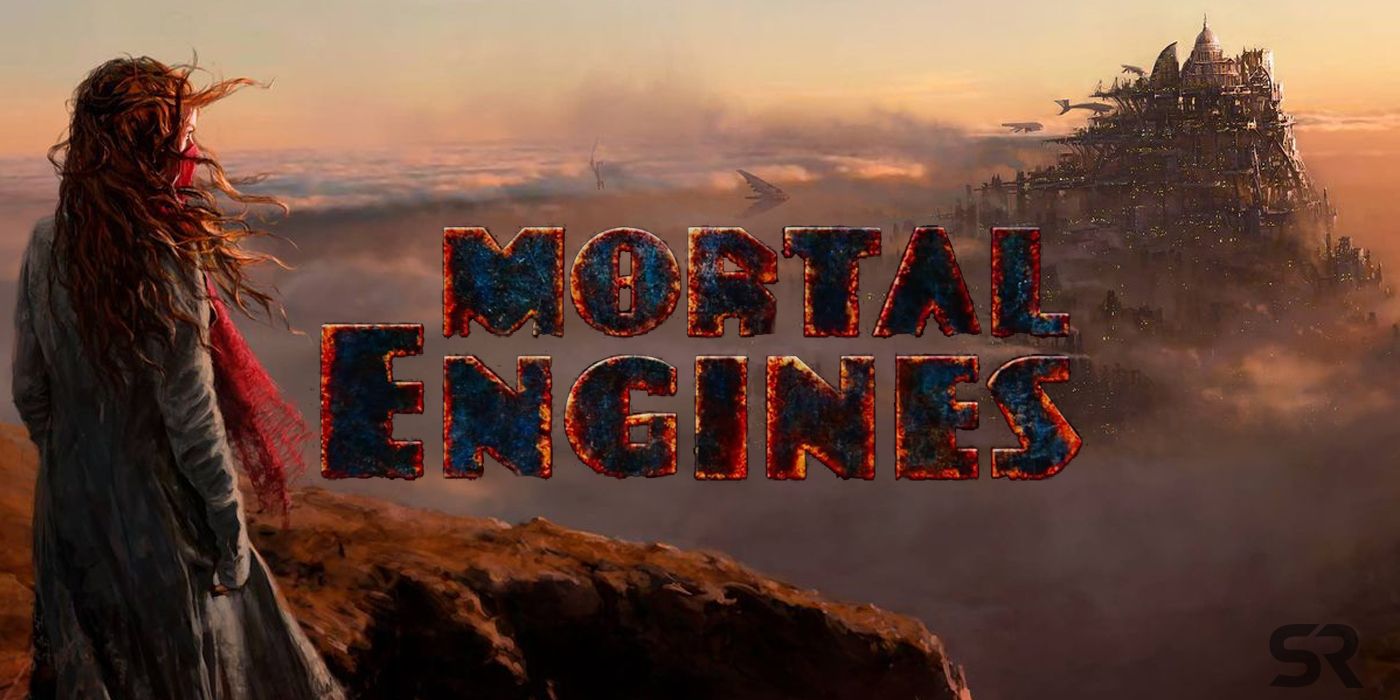
Mortal Engines


This review may contain spoilers!

This is a very cliched blockbuster. It is a very well made cliche, but a cliche nonetheless. I would give Mortal Engines a 6.5/10.

This is a movie that pulls out all the stops in the first twenty to thirty minutes; the set up is thrilling, there's an intense chase sequence and even the exposition is somewhat engaging. I truly loved just how much had been put into the production of this film, even though the story falters a lot at least those visuals are right there to lift it back up. The cinematography is a grandiose treat, taking in massive set pieces and special effects with ease. The special effects themselves certainly flaunt a rather impressive budget with mobile cities and aircraft looking detailed and unique, yet it is the design for Shrike that leaves the biggest impression by far. The score for the film speaks of the epic scale at work here, going full fanfare for the epic chase sequences and monolithic battles in the final act.

Hera Hilmar, who played Hester Shaw, is a strong protagonist throughout the feature; her aggressive stand-offish attitude is tempered by her extremely vulnerable upbringing making for a complex role. Robert Sheehan, who played Tom Natsworthy, is a very sheltered yet kindly protagonist when first we meet him; his meekness gives way to bravery as he follows Hester upon their journey back to London. Stephen Lang, who played Shrike, practically breathes life into what could have otherwise felt like a mindless monster character; Lang reveals the tragic personality of this machine that is attempting to break through the surface.

However, the best performance came from Hugo Weaving, who played Thaddeus Valentine. This is a character who presents a front of governing from the best of intentions, with the good of London at the forefront of his mind. Yet Weaving masterfully reveals his role to be a power-mad tyrant, striving for a military power the likes not wielded by other cities. As his actions grow wilder and bolder he distances from the allies he once held close, even his daughter. Finally, come to the end Valentine is a purely malevolent force bent solely upon destruction, only ever really leading to his downfall.

The film suffers heavily after the first twenty minutes, from about this point we're treated to a terribly underwhelming generic young adult film. The most glaring issue is how overcrammed the film is; you have to learn a lot about the world and not very much makes sense. There's a ton of history, technology, political structures, factions and personal motivations that layer one another and getting through the film attempting to register it all feels like a chore rather than a pleasure. The camp plotline about the small resistance fighting a giant monolithic power is worn out, but not as worn out as the poor love story between the two main characters. The film looks original and makes a grand impression but watch for long enough and you'll see a film with all shine and no substance.

Jihae, who played Anna Fang, is this very monotonous freedom fighter who doesn't register much emotion throughout the film; she has a great presence in the fight sequences but she isn't a role that you relate to on any level. Ronan Raftery, who played Bevis Pod, is a very mild-mannered role who is quite easy to look past; Raftery presents a plot point rather than a character and is only kept around to give Leila George something else to do. Leila George, who played Katherine Valentine, doesn't possess a strong relationship with Sheehan or Weaving making her significance hard to place; the film places a lot more importance on her role than the actress every really gives back. Patrick Malahide, who played Magnus Crome, is a sour and irate secondary antagonist; Malahide plays a tired old villain and it's pretty clear what his fate is going to be from the beginning. Colin Salmon, who played Chudleigh Pomeroy, is very much comfortable in the background of the film; Salmon presents mild exposition and little else to the feature. Rege Jean-Page and Kee Chan, who played Captain Khora and Governor Kwan respectively, are the rather two-dimensional characters who represent the resistance in this film; Chan in particular sticks closely to the stereotypical roles he has done in past features. Sarah Peirse, who played Dr Twix, is a character armed with more knowledge than seems likely for her to possess; this role is just a glaring convenience the whole way through and her relationship with Weaving is never really fleshed out or explained.


Wednesday, 5 December 2018

Robin Hood


This review may contain spoilers!

This film begins by telling you that this is unlike any Robin Hood film you've seen before; so it's fitting for this review beginning with me telling you that this film is like every Robin Hood film I've seen before. I would give Robin Hood a 5.5/10.

This film is actually rather fun to watch when it comes to some of the production elements, it has all the working components of a fun, mindless blockbuster. In particular, the speed and fluidity of the fight sequences look great, right down to some of the horseback stunts that really impress the viewer. The editing for the film manages to keep the action moving in good time, while also presenting the timing of a sequence or scene rather well. The best achievement from this film is certainly the score by Joseph Trapanese; the music throughout sets the blood pumping in those high energy scenes or slips in an emotional mood to a scene that desperately needs that feeling.

Taron Egerton, who played Robin of Loxley, is an excellent pick for the protagonist of the film; Egerton is more than capable of portraying the indignant young rebel and lends a hefty amount of charisma as the thief becomes a leader of the people. Ben Mendelsohn, who played the Sheriff of Nottingham, has absolutely triumphed in every antagonist role he's taken up and this role is no different; his wild displays of malice fringed by a deep-rooted weakness at the hands of those who made him who he is. Paul Anderson, who played Guy of Gisbourne, is another great antagonist who is merciless against those who oppose him; Anderson is in a role who could've been another henchman but he never once allows the character to become two-dimensional.

However, the best performance came from Jamie Foxx, who played Little John. From the beginning of the film, Foxx presents the sheer intensity of this Arabian warrior through his physicality and initial fight sequences. It does not take long for us to see Foxx shine when his role has to suffer through watching his onscreen son brutally murdered by Crusaders. Rather than break, a fire awakens in this role and the mission of fighting the rich to prevent war comes to pass; a goal that this character pursues with tunnel-vision. Throughout the entire film, Foxx has some nice camaraderie with Egerton and equally shares a powerful rivalry with main antagonist, Mendelsohn.

This film tries really hard to push the idea that it's new or original in its design all the while playing to obvious themes or cutting corners to advance the story. This is a Robin Hood that pins a lot on the romance between Marian and Robin, a relationship that comes to pass in the first scene and grows corny very early in. Yet the film continues to return to this subplot as a significant driving force, even allowing it to become a love triangle narrative the likes that haven't been seen since the young adult novel adaptation craze. Throughout things are just pushed along so that the narrative can happen without much justification. Robin and John's alliance is very quickly forged and Robin agreeing to join the fight is more surprising than exciting; alternatively, the reasoning for keeping Marian away from the antics of 'the Hood' is flimsy at best. Add onto that the poorly written antagonists and the film falls apart. The major antagonists of the film are the Church and they're so absurdly over the top in their portrayal of being evil that it becomes melodramatic. The cinematography used throughout is very experimental which is a risk that doesn't pay off, the random shots at odd angles that litter a scene don't heighten the pace but rather hamper the films otherwise fine visuals.

Eve Hewson, who played Marian, is very much built up to be the romantic counterpart to Egerton but the two severely lack chemistry; Hewson feels rather bland and doesn't seem committed to playing to the revolution storyline or the love triangle storyline. Jamie Dornan, who played Will Scarlet, has found a better film than the Fifty Shades series but hasn't proven to be one of the better aspects of said film; Dornan oozes angst in every scene and his role fast wears the viewer down. Tim Minchin, who played Friar Tuck, is this unbridled comic relief who lays it on pretty thick throughout; Minchin's constant bantering and jokes make for light relief but grate against the tone of the film severely. F. Murray Abraham and Ian Peck, who played the Cardinal and the Arch Deacon respectively, make for a pair of overdramatic master villains; it's disappointing to see the masters behind the antagonists' plot devolve into melodramatic laughter and moustache twirling.

Tuesday, 27 November 2018

Widows


This review may contain spoilers!

I'm a sucker for heist films but to see a heist film where the leads barely interact and there's no build-up to the heist itself was always going to fall flat. I would give Widows a 4/10.

This film does not shy away from depicting a brutal, violent criminal underworld on the fringes and intermeshed with wider society. Throughout the film, the protagonists are threatened or placed into situations that are extremely perilous and invasive; you watch a world that is governed by political campaigning and mundane occupations delve into backroom dealing and gang violence. Widows is a messy film in a lot of respects but it juggles the setting and tone extremely well.

Brian Tyree Henry, who played Jamal Manning, really eclipses most other antagonists within the film; Henry's unabashed conviction towards achieving alderman is a driving force and it's interesting to see the ways he chooses to portray that, such as the scene in which he confronts Davis. Garret Dillahunt, who played Bash, is a seemingly simple figure who presents a firm pillar of advice and support for Davis in the first two acts; Dillahunt brings forth a loyal role who will take any task or punishment in aid of those he cares about. Jon Michael Hill, who played Reverend Wheeler, is intensely charismatic that you feel his character to be almost intoxicating; Hill's role holds power and has a great deal of self-awareness about this as he cleverly plays both sides of the political fence.

However, the best performance came from Liam Neeson, who played Harry Rawlings. You don't see a lot of Neeson in this film but the little you get is nothing short of a treat. There is something inherently pure and good in his affections for Davis' Veronica that we begin to see the fantasy she has created is a shadow and not the truth of Neeson's role. As the film begins to progress and we see this character begins to bargain and trade promises for time it becomes clear how corrupt a figure this role is. The final confrontation between Neeson and Davis is an epic display of betrayal and greed that shreds apart the image of Neeson we had previously held in our heads. This is a small role that manages to shine clearly throughout the film.

This film pushes the idea that it's a heist film despite having most of the features of a slow-burn indie crime feature. What is most distinctly frustrating is how the title characters feel barely banded together throughout, Veronica's story takes priority at every turn and you barely see her interact with the rest of the team. In a way, it's hard to believe the heist even happens because the prep scenes are barely there and everything just goes too conveniently well. The film spends too much time walking off the beaten path and examining how Belle will cram into this mess as early as the beginning of the third act, or over-analysing a rather bloated self-empowerment sub-plot for Alice. The film is constantly finding distractions or adding of big elements to the plot that should matter but likely no one will care about; the political skirmish for Alderman a prime example of this. The whole journey is a predictable yawn-fest, with major plot twists such as characters returning from the dead causing few viewers to bat so much as an eyelid. The cinematography tries a little hard to get inventive and experimental with entire scenes, this just has the pay off of feeling indecisive and lacking a coherent visual style. The editing manages to keep the film trudging a lethargic pace. The score for this film is done by none other than Hans Zimmer which is surprising considering the music is barely present throughout; this film loses a lot because there is no substance or emotion in the backing tracks.

Viola Davis, who played Veronica, has little emotion to give to this film; Davis feels cold and distant almost the entire film and as an audience member she's a difficult protagonist to engage with. Michelle Rodriguez, who played Linda, doesn't really give a great deal of range either and seems perpetually unhappy; Rodriguez's role doesn't seem to much care for her shopowner background and it's hard to even be convinced that she's a struggling mother. Elizabeth Debicki, who played Alice, has done this role before and better; Debicki's entire arc of recognising that she's clung to men and then seeking her own self-power isn't very original in its execution. Carrie Coon, who played Amanda, is the grumpy widow who doesn't want to engage with the rest of the cast; Coon's embraces her role's abrasive persona a bit too strongly. Robert Duvall, who played Tom Mulligan, really goes overboard in his senile elderly racist performance; Duvall seems like an absurdity tacked onto the film. Colin Farrell and Molly Kunz, who played Jack Mulligan and Siobhan respectively, are the political figures you are supposed to perceive as good initially but the film just makes you feel apathetic about them; I still don't really know if I'm supposed to consider Farrell as an antagonist because the film dealt with his role in such a murky way. Daniel Kaluuya, who played Jatemme Manning, seriously found his peak with Get Out and now we're experiencing the low; Kaluuya's wild and irate gangster feels a little too over the top for the tone of the film. Jacki Weaver, who played Agnieszka, has been typecast well and truly as the crazy mother role now; Weaver just lays it on too thick every time she picks up one of these characters and it just means there's little connection between her and Debicki. Cynthia Erivo, who played Belle, is introduced into this film far too late to be lumped into the main heist group yet she is anyway; Erivo bounces her role's personality from being meek to being confrontational at an annoyingly frequent rate. Lukas Haas, who played David, is an odd character this film pitches alongside Debicki; the pair have a lot of chemistry but you're not really sold when Haas tries to portray the nastier side to his character.

Friday, 16 November 2018

Fantastic Beasts: The Crimes Of Grindelwald


This review may contain spoilers!

If there's one thing JK Rowling could have learnt from Star Wars it's the ill-conceived notion of installing a prequel series into your franchise. I would give Fantastic Beasts: The Crimes Of Grindelwald a 4/10.

This film has a solid twenty minutes of good cohesive plot and that's generally whenever there's a focus upon the character of Gellert Grindelwald. This antagonist has a very quiet, methodical way of seeing his ends met and is able to win battles through his powers of persuasion rather than his magical ability. Grindelwald is a fearsome antagonist, an antithesis to Dumbledore through and through which is what makes him so thrilling to watch. The way this world is captured is so creative and absolutely grandiose, the large-scale special effects are captured in thrilling ways and the camera is used creatively to depict effects of magical spells. The special effects are certainly where these films come to life, seeing magical creatures roaming through London houses or Paris streets is a real treat. The music for the Harry Potter franchise has always been exemplary and this continues to be the case in the Fantastic Beasts series, there were some notable returns to the old with the revelation of Hogwarts as a setting but equally some of the new music, like Grindelwald's escape, will have you right on the edge of your seat.

Eddie Redmayne, who played Newt Scamander, has really found one of his most iconic roles in Newt; this role is disconnected from people and yet quietly confident and selfless that he becomes a great protagonist to watch. Callum Turner, who played Theseus Scamander, plays a headstrong older brother to Redmayne's Newt that actually feels like a mature distant sibling relationship; Turner does a wonder at being torn between his role's sense of duty and loyalty to family throughout the feature. Jude Law, who played Albus Dumbledore, does an admirable job as a young Dumbledore; this may not be the most ideal candidate for the casting but Law's skill as a performer shines through. Dan Fogler, who played Jacob Kowalski, is really a strong comedic talent who grounds these new films in a lot of ways; yet this time around Fogler's portrayal of his character's desire to reunite with Queenie and his grief at her corruption is rather profound. Thea Lamb and Joshua Shea, who played Young Leta Lestrange and Young Newt Scamander respectively, do an incredible job of capturing the relationship between their roles in a way you don't really get between Redmayne and Kravitz; Lamb shows how Leta has been bullied and haunted both due to her family name and her past actions, while Shea just looks and feels like Redmayne beat for beat.

However, the best performance came from Johnny Depp, who played the lead antagonist: Grindelwald. Over the past few years I've seen Depp play to blockbuster characters in a way in which their quirks were emphasised but not their actual character, yet sometime in 2017, my opinion changed when I saw a significant return to form in Murder on the Orient Express. Now Depp keeps that streak alive with this precise and calculated villain who is keeping this Harry Potter prequel universe alive. Depp approaches a scene with a quiet finesse, happy to stand the cold observer while keeping a lid on what can only be a deadly power brewing within. What I loved about this role was how he was described as being seductive or manipulative and it showed. There were key scenes where Grindelwald would stride amongst characters and speak calmly, persuasively and in a manner that provoked little response. Depp spends this whole feature making you want to listen to his star antagonist, hear what he has to say and then watch in horror as he conducts his magic and brings death right in that final act.

In many ways, it looks like the magical wizarding world of Harry Potter and it sounds like it too but in fact, there's no magic here and the romantic escape to Rowling's world isn't there anymore. Back when I watched the first Fantastic Beasts I thought the American setting was too harsh for what was trying to be achieved but in truth, it's more than that. These films are trying to tell a dark, conspiratorial cold war story in the wizarding world with characters who aren't young and see the wonder of the world around them. It's a story that feels dark and grey because it is so and that's not interesting nor is it fun - it's certainly less than what audiences are expecting. Yet that's merely tone issues and that was already there; what this film does wrong so much more so than the first was that so much happened and yet nothing at all did. The story here has a main plot with little substance, Grindelwald escapes and then holds a meeting at the end of the film for his followers in which he secures Credence. That main storyline is talked about a lot but doesn't ever feel like the focus or the driving force. Instead, this film pushes a dozen minor subplots that tease surprise revelations about a character's identity, there's a number of romantic subplots in the works, Newt's still collecting the odd magical creature and there are about eight new characters to attempt to focus on. The first Fantastic Beasts very frustratingly set up a lot with the implication it would be expanded upon in the next film yet this sequel answers only a few questions while confusing you by setting up and introducing more than is really needed. Rowling certainly can write some amazing novels but I'm not very convinced she can construct a good screenplay.

Kevin Guthrie and Poppy Corby-Tuech, who played Abernathy and Rosier respectively, are rather dull as Grindelwald's lackeys; these two are seen the most as his loyal followers but they have no personality to them and are essentially glorified extras. Zoe Kravitz, who played Leta Lestrange, was very much hyped up in the first film and never really lives up to it in this sequel; Kravitz feels disconnected from those she acts against and doesn't seem to balance out the moral and nasty sides of her character. Derek Riddell, who played Torquil Travers, is a mean enough role but doesn't seem too different from all the other mean older Aurors in these films; Riddell plays an abrasive figure but that's all he ever really amounts to being. Ezra Miller, who played Credence Barebone, is the bane of these Fantastic Beasts films; it's a pity his character continues to have a presence because there's so very little to him. Ingvar Eggert Sigurdsson, who played Grimmson, is one of those characters that really feels like he's overpopulating the film; Sigurdsson is just there to be a further point of antagonism in the 'find Credence' subplot. Victoria Yeates, who played Bunty, is a character suddenly attached to Redmayne's lead who you don't really get time to adjust to; she's barely introduced before the film pulls you away from her again. Alison Sudol, who played Queenie Goldstein, was one of the shining performances in the first film but her character is all over the place this time around; Sudol's role is seen to be manipulative at first which is quite off-colour and the whole subplot where she is corrupted is a significant weak link. Katherine Waterston, who played Tina Goldstein, is such a bland character who has little connection with Redmayne; Waterston just doesn't feel like she has the intensity to be playing an Auror. Claudia Kim, who played Nagini, is a role who is very much a nod to Harry Potter lore but who doesn't have a character outside of that; Kim feels like she's there so that Miller has someone to talk to in his aimless subplot. Olafur Darri Olafsson, who played Skender, is the generic mean-spirited circus showman; Olafsson's role is quite similar to Perlman's from the first film, a glorified cameo that doesn't have much of an effect. William Nadylam, who played Yusuf Kama, is this overly intense minor role who just has more screen time than he's really worth; Nadylam's feverish angry rants aren't very inspired and he doesn't have the presence to lend to his role's mystique. Brontis Jodorowsky, who played Nicolas Flamel, is introduced far too late into the film as a sort of novelty; but really the sudden introduction of Jodorowsky is another character the audience is trying to puzzle out exceptionally late into the feature.

Thursday, 8 November 2018

Overlord


This review may contain spoilers!

This film owes a lot to a great director and cast making good use of a pretty awful script. I would give Overlord a 6.5/10.

This film is an ambitious genre smash, the likes of which are becoming more and more common these days. In this war/horror/sci-fi feature we follow a small band of American soldiers who drop behind enemy lines to blow up a Nazi radio jamming tower; little do they expect to find a secret Nazi laboratory in which ubermensch (supermen/supersoldiers) are being created. Overlord has a real talent for increasing the threat around the protagonists and immersing you within this dangerous setting; Nazi soldiers lurk behind every tree, a protagonist is suddenly erased by a mine or a great German Shepherd may maul a character before you expect it. By this measure, I found the first two acts absolutely enthralling and suspenseful. The cinematography at work throughout is inspired, with action coming fast yet playing with experimental angles; there is also an eye for powerful shots of war and desolation that populate the first act especially. The editing for the film moves at a great pace, even the way the film is cut to be slow then quicken for the sake of horror elements is impressive. The score used throughout really aids the tone and sets your nerves on edge, at first you feel immersed in the booming deafening world of war but as the sci-fi/horror elements come to play this same music takes a twisted and distorted turn that put you ill at ease.

Wyatt Russell, who played Ford, is a haunted yet dangerous soldier who is solely driven by a need to see his mission done; Russell's portrayal of the rage and hatred that his role barely has a lid on is nothing short of impressive. Mathilde Ollivier, who played Chloe, is a good representation of a people under hostage hungry to rebel; Ollivier narrowly navigates her way past protagonist and antagonist alike in an effort to obtain freedom for her and Taufer's Paul. John Magaro, who played Tibbet, is a fast-talking crass member of the platoon who entertains highly throughout; it's interesting hos Magaro can come across as initially so antagonistic to Adepo's role yet make the audience feel so much for him in the scene where he saves Taufer's Paul. Gianny Taufer, who played Paul, is one of the better child actors I've seen this year; Taufer imbues his character with an innocent curiosity about American culture which forms a strong connection that is the heart of this film. Bokeem Woodbine, who played Rensin, is hard as slate and tough as nails as the military corporal; Woodbine has some strong one-liners and is completely fearless under the threat of death.

However, the best performance came from Jovan Adepo, who played lead protagonist: Boyce. This character exists in a state of quiet morality and intense terror when first we meet him. Adepo very skillfully shows a young man lost in wartime, he is surrounded by violence and malice yet has managed to cling firmly to his principles. As the narrative carries forth Boyce has to grapple with some tough decisions such as saving Chloe from Wafner or exfiltrating his friend Rosenfeld from the underground Nazi laboratory. As this strength within Adepo's role grows he finds the courage to kill the abominable ubermensch menace that is rising around them and even manages to take charge within his platoon. This lead character is fascinating because he's seen as being incapable due to his reserved moral stance at first, yet without this perspective, the protagonists would never have triumphed over the ultimate threat of the film.

The struggle with making a film that has so many genre elements within it is finding the balance. This film banks almost all of itself on pulling off a war film which it does admirably well, right up until that final act. Eventually, the feature has to talk about the German super-soldiers, what created them and what purpose they actually serve. Sadly, this isn't really fleshed out till the very end of the second act and from that point, the film has such an intense sci-fi horror vibe that you feel like you're watching a B-list blockbuster as opposed to the interesting visual feature displayed prior. Quite frankly the ubermensch storyline just doesn't make a lot of sense, there's some black goop under a church that didn't do anything until the Nazi scientists had their hands upon it. This film might have had a better chance if the antagonist hadn't been Wafner, the German captain. Wafner controls the military might in the town and is captured very early on, he's depicted as being laughably weak and more of a hostage figure. When the film decides to cast him as the major antagonist by the end of the film and make him a special effects monster the interest dips a lot, the Nazi scientist behind these creations certainly offered more opportunity I felt. The soundtrack for the film also wasn't very good, 'Bridging the Gap' by NAS is so completely different from the score of the film that you are immediately dumped out of what you've been watching just as the credits hit which leaves you feeling both confused and a little disappointed.

Pilou Asbaek, who played Wafner, has to be one of the worst antagonists I've seen in a blockbuster recently; Asbaek is so completely unintimidating that you're looking for danger from outside sources and his change to a monster-type villain by the end is cornier than anything else. Iain De Caestecker, who played Chase, is such a meek role that you forget he's there half the time; his violent transformation into an ubermensch is abrupt and comes off as a moment that doesn't really fit De Caestecker's range. Jacob Anderson, who played Dawson, is a role written to die; Anderson's light tone is short lived and needed more screen time to really resonate with the audience. Dominic Applewhite, who played Rosenfeld, is a role who is perhaps the easiest to forget as the writers neglect to mention him after he disappears in the first act; Applewhite's return is quieter than it really should've been and his character doesn't fit into the chemistry of the platoon.

Tuesday, 6 November 2018

Bohemian Rhapsody


This review may contain spoilers!

This film is a touching letter of love to Freddie Mercury and a tribute to the family that is Queen. I would give Bohemian Rhapsody an 8/10.

This film focuses upon the life of Freddie Mercury, how the band Queen came to be, how it all fell apart and how it came right again for the 1985 LiveAid concert. Freddie Mercury as a character is so fascinating to watch because he is an outsider almost exclusively his whole life, you want to feel sorry for him until he very curtly reminds you there isn't time for such trivialities. Mercury's story is one of epic music and ambition, in which he sees the future he wants and actively seeks it out. The family aspect of Queen is at the heart of the film, with the band members squabbling like siblings but also staying loyal to one another in a manner you don't often see in musical biopics. Freddie spirals into a manic downfall during this film, for a long time he lives a life of debauchery as he struggles with aspects of his identity (both sexual and otherwise). The editing for the film has some nice flair, the crossfades used to show the impact Queen's music had on each other and their audience was inspired. The soundtrack for the film is incredible to no one's great surprise; it was fascinating how a number of songs felt like characters in their own right, 'Killer Queen', 'Love of my Life', 'Bohemian Rhapsody', 'We will Rock You' and 'Another One Bites the Dust' invoke some of the best scenes in the feature.

Rami Malek, who played Freddie Mercury, does an exceptionally good job as the leading protagonist; Malek embraces the self-assured confidence of Mercury while subtly portraying the moving loneliness of the character. Gwilym Lee, Ben Hardy and Joseph Mazzello, who played Brian May, Roger Taylor and John Deacon respectively, are together the heart of the film' these three have such charisma and chemistry with one another and Malek that you grow immersed in their journey together. Tom Hollander, who played Jim Beach, at first comes across as a dry role with a bit of wit; yet in a few short scenes, you see Hollander's role form a heartfelt bond with the band. Aaron McCusker, who played Jim Hutton, is a very grounded role in the chaos of the second act; McCusker has a calm and reasonable manner that makes for a nice counterweight to the wild extravagance of Malek's Mercury.

However, the best performance came from Mike Myers, who played Ray Foster. Myers is a surprising pick for some and it was a tough call between him and Malek if I'm being honest. Yet while it took a few scenes to see past Malek and perceive Mercury, Mike Myers was this gruelling music exec from the go. This character was decidedly blunt and rude, with every line traded often sharp and decisive. Myers crafts an antagonist who is smug and mean, yet portrayed as a figure others laugh at and not with. This is a character who brings out one of my favourite scenes of the film and it's a treat to see Myers onscreen again.

The main protagonist takes some getting used to at first, Freddie Mercury seems bizarre and he isn't very easy to empathise with initially. The first act isn't at all helped by the fact it tries to rush through, the success of Queen and marriage between Freddie and Mary seems to happen in the blink of an eye. Bohemian Rhapsody is quite comfortable playing to the formula of past biopics, taking familiar tropes and playing them out beat for beat. It's a successful move but makes for a predictable narrative. The cinematography attempts some unique things in a couple of scenes but ultimately is quite simple to watch, there aren't many creative shots and scenes often have a very simple look to them.

Lucy Boynton, who played Mary Austin, feels like a subplot awkwardly tacked on to the film; Malek and Boynton have a rather boring chemistry, though the pair certainly tries their best. Aidan Gillen, who played John Reid, is a great actor who had the misfortune of getting cast in one of the most boring side characters of the film; there is just no personality here and Gillen fast becomes wallpaper. Allen Leech, who played Paul Prenter, is a two-dimensional antagonist, to say the least; Leech's character is slimy and manipulative but offers nothing when it comes to substance. Meneka Das and Ace Bhatti, who played Jer Bulsara and Bomi Bulsara respectively, give the most generic performance in the film; the distant parent trope is rather played out and little is done to make this depiction stand out.