Popular Posts

Saturday, 25 November 2017

Daddy's Home 2


This review may contain spoilers!

This may not be the best comedy film of the year, but it certainly is just as fun as the first film. I would give Daddy's Home 2 a 6/10.

This is a comedic slapstick film that knows how to construct really meaningful, entertaining moments throughout; often there'd be a big bit that sets up for a punchline quite well and certainly goes for impact each and every time. There are also some really nice heartwarming and emotional scenes between Dusty and his father, Kurt, as well as Brad and his father, Don. These father and son relationships are constructed to lend themselves to some impactful scenes come the second and third acts, and these come to fruition in rather meaningful and funny ways. The soundtrack for the film is a very nice balance between well-selected Christmas tunes and well-known tracks used to comedic effect, with 'Do They Know It's Christmas' performed by the cast making for an incredibly hilarious end.

Will Ferrell, who played Brad, really does the bumbling naive role quite well; his rather pointed moments of awkward humour, such as giving his stepson romantic advice makes for some brilliant scenes. Mark Wahlberg, who played Dusty, has a very tough driving force throughout the film; I really enjoy how Wahlberg leads the narrative, often creating or concluding some of the major conflicts within the feature. John Lithgow, who played Don, really does feel like the good-natured rambling grandfather; Lithgow really comes into his own when he has to confess his divorce to Ferrell in what becomes quite an emotionally charged scene. John Cena, who played Roger, has some walls up towards certain characters and generates conflict from the moment he appears onscreen; yet Cena does a great job of dropping these barriers and revealing his role to be a lot more compassionate than first thought. Chesley Sullenberger, who played Brad's Stepdad, is quite a funny cameo to conclude the film upon; the presence of Sullenberger contrasts really nicely with the Ferrell/Lithgow relationship seen throughout the film. Liam Neeson, who voiced himself, is another cameo that adds significant comedic effect to the film; Neeson really plays up quite an exaggerated Christmas action hero speech which makes his scene one to remember.

However, the best performance came from Mel Gibson, who played Kurt. This was a role that I was both excited for and hesitant about; I didn't expect a comedic feature from Gibson so that was interesting, yet it was clear the role would be Gibson playing a facsimile of himself. Yet it's precisely this sort of character the film thrives upon, seeing Gibson laugh and be entertained within scenes goes a long way to enjoying them as an audience member. The crude, lowbrow humour that comes from this role is a fun contrast to the other characters and lends itself to some interesting interactions between Gibson and the child performers. What really works for the film, however, is the rocky relationship between Gibson and Wahlberg's roles. The divide between these two, which progresses through conflict, confession, reconciliation and a fun moment which mirrors Ferrell and Lithgow, makes for one of the best plot arcs of the feature.

While this film has some funny moments and some nice emotional payoff, there isn't much when it comes to one cohesive main plot. Ultimately this is a film which feels like a collection of subplots, sewn together by comedic skits or moments of slapstick. The film bears great semblance to the original Daddy's Home also, going so far as to repeat key plot moments and repeat jokes in quite an obvious manner. The comedy used throughout the film is good for the most part yet takes some risks which really don't pay off; comedy around gun laws and incest really falls flat and tends towards the uncomfortable. The cinematography is flat out boring, with the camera work feeling set up when you watch it and many of the young extras looking right into shot. The editing used throughout the film mirrors the lack of direction evidenced in the cinematography, resulting in a sluggish sense of pacing.

Linda Cardellini, who played Sara, tries really hard to put herself out there more but is ultimately wasted as the female protagonist; her role's desperate attempts at attention grow annoying, particularly as her scenes are painted as minor filler. Alessandra Ambrosio, who played Karen, doesn't have much of an onscreen presence and seems comfortable in the background; Ambrosio's role isn't really painted as likeable and this is never resolved in a satisfying way. Owen Vaccaro, who played Dylan, is annoying and doesn't deserve the attention this film gives him; the ultimate romance subplot around him grows quite uncomfortable, partly due to Vaccaro's performance. Scarlett Estevez, who played Megan, becomes quite random and wild for the sake of it in this film; Estevez becomes a character used to fill in space and makes for simple comedic relief. Didi Costine, who played Adrianna, is quite a generic character; the entitled brat role really makes Costine one of the most boring young performers to watch. Yamilah Saravong, who played Casey, isn't really given much more to do other than be a red herring love interest; Saravong's role has probably some of the least significance to the film.

Saturday, 18 November 2017

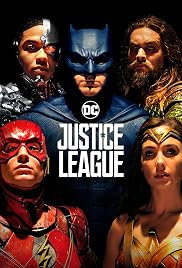
Justice League


This review may contain spoilers!

This is a pretty mediocre film by any measure, yet it somehow manages to present a final product that is a step up from the last three films. I would give Justice League a 6/10.

There are several moments throughout this film that shows how well this functions as a superhero team film; moments where heroes quip alongside one another or come into some really well-orchestrated inner conflict. The cinematography used throughout the feature shows a very trained and expert eye; the attention to detail throughout this film means that as far as visual storytelling goes it's about perfect. The special effects are also some of the best I've seen for a superhero feature; slow-motion sequences, battle-torn landscapes and the manner in which super-strength is portrayed is quite impressive. The score for the film is very powerful, it stands out by setting its own unique tone and giving the feature a sense of grand scale.

Ben Affleck, who played Batman, really drives the narrative of this film quite well; Affleck balances the hard, cynical nature of Batman with the emerging hope for the future his role has developed. Gal Gadot, who played Wonder Woman, is really the strength of this film; Gadot immediately recaptures the tough edge of her role while also maintaining a caring heart towards her fellow teammates. Jeremy Irons, who played Alfred, somehow manages to outshine Affleck with his cynical persona and humour; Irons has a dry sense of humour throughout that often manage to steal the spotlight in the scenes he is in. J.K. Simmons, who played Commissioner Gordon, immediately forms a solid connection with Affleck that that makes their characters famous relationship immediately evident; I like Simmons' more grizzled Gordon, he enters the screen with a world of experience upon his shoulders.

However, the best performance came from Jason Momoa, who played Aquaman. This reluctant hero really succeeds at creating some interesting conflict within the team, in particular, his clashes with Affleck are interesting to see play out. Momoa brings forth a very transparent sense of indifference about the events within the film; yet, this character is clearly driven by a responsibility to defend his world. The sarcastic and offhand humour which Momoa often lands is a really nice fresh change of tone within the film; it's not a complete departure from what has been done so far but it's heartening to see such a well-crafted, unique character such as this.

This film is a lot of empty set up and information off-loading, as an audience member this is very much a film that likes to tell you about everything rather than let you experience it. The pacing of the film is slow and often leaps from one beat to one significantly different to the other. The film seems preoccupied with trying to justify fitting in so much backstory, worldbuilding, character introductions, references and mistakes that needed fixing from past films; that not a great deal of it comes together cohesively. Justice League places too much confidence in characters that have already been established to carry the film, while new characters or aspects aren't examined in great detail or given many opportunities to take the focus of the feature.

Henry Cavill, who played Superman, has played the role so differently over so many films now that he no longer seems consistent; Cavill is very roughly introduced into this film and once he does appear on the screen he comes across as little more than cheesy. Amy Adams, who played Lois Lane, seems to have really been stuck into the token love interest role; Adams' overly passionate speeches and dialogue exchanges feel very detached from anything an actual person would say. Ezra Miller, who played The Flash, very nearly tanks the whole film with his horrendous performance; Miller comes out with some of the dumbest lines which often feel out of character and really don't mesh with the tone of the film. Ray Fisher, who played Cyborg, gives quite a monotonous depressing performance throughout; Fisher is a character more reminiscent of something from Batman V Superman rather than a superhero film that has energy and which an audience would actually like to watch. Diane Lane, who played Martha Kent, seems rather redundant at this point; Lane walks into scenes often looking as if she has little understanding of what purpose she has in the film. Connie Nielsen, who played Queen Hippolyta, still suffers from being too identical to the Amazonian 'characters' as a whole; Nielsen is in this film for a quick messy action scene and is immediately forgettable. Ciaran Hinds, who voiced Steppenwolf, is a pretty generic antagonist, to say the least; Hinds' bellows out a lot of exposition and empty one-liners without ever really defining or developing his role. Amber Heard, who played Mera, is introduced in this film in a manner that seems to indicate we should know this role already; Heard is dull and her sudden intense conflict with Momoa seems quite out of nowhere. Joe Morton, who played Silas Stone, is rather boring as yet another minor scientist character; furthermore, Morton's father/son relationship with Fisher is nothing we haven't seen before and is one of the weakest aspects of the film. Billy Crudup, who played Henry Allen, suffers from a weak father role similar to Morton's; Crudup doesn't have any chemistry with Miller and it's a shock that this pair were cast alongside one another at all.

Thursday, 16 November 2017

Bad Moms 2


This review may contain spoilers!

This film is a pity because it's a dumpster fire of a film and sets out to undo the charm of what made the first film so good. I would give Bad Moms 2 a 2/10.

The sarcastic narration and leading presence of the central Amy character is one of the strengths consistent throughout the film; it's a role that people can empathise with which makes stories like these all the more interesting.

Mila Kunis, who played Amy, makes for an incredible leading protagonist; Kunis is a performer who manages to balance a very grounded figure and an equally comedic one. Christina Applegate, who played Gwendolyn, is a nice cameo in this film; Applegate's appearance is a nice reminder of the high standard the first film set and an incredible comedic talent within the film. Cade Mansfield Cooksey, who played Jaxon, is quite humorous as the dim-witted son of Hahn; Cooksey stumbles through at an intentionally bumbling rate and has great timing. Ariana Greenblatt, who played Lori, has a snarky mature attitude which really makes her performance stand out; Greenblatt displays a comedic performance that lands in a manner her older cast members don't always achieve.

However, the best performance came from Kristen Bell, who played Kiki. Bell presents quite a quirky role which is complemented by the often timid nature of her character. I enjoyed the erratic sudden outbursts which Bell seized and makes use of at very random and unpredictable moments throughout the film. While it was an awkward aspect of the plot to see play out I thought Bell did a great job in reacting to and engaging with Hines in this film. The troubled, often pervasive mother interfering with Bell's role was one that very comedically handled and fit the character Bell had crafted quite well.

This film had a really awkward plot that felt segmented into tiny pieces that never really came together at all; the title cards that were used to deliberately do this certainly didn't go a long way towards helping this. Bad Moms 2 is a film that was rushed out one year after the success of the first film and completely fails to present a feature that captures the same wit nor does this one really have any substantial message. It's disappointing to see random subplots that are clearly intended as filler content take up so much time; furthermore, the main plot doesn't exactly carry a lot of weight and feels more like the arc of a tv show episode. The new main cast for the film isn't particularly redeeming, which makes the ending rather weak and the characters as a whole harder to empathise with. The cinematography is quite simple and doesn't seem to have much thought put into it, often shots seem to have been framed up with the purpose to get what is the simplest shot possible rather than seek out a meaningful image. The editing for the film was likewise quite slow and seemed to have failed to actually leave anything upon the cutting room floor; there was obviously many shots or moments that needed to be cut but were kept to make the runtime substantial. The score for the film is non-existent and certainly not memorable; while the soundtrack is a horrific mish-mash of music that doesn't even consistently link to the Christmas theme.

Kathryn Hahn, who played Carla, seems to have been a real problem for the writers this time around as her whole arc relies upon two subplots crudely smashed together; Hahn is a rather repetitive performer who makes easy jokes and doesn't put much into crafting a convincing performance. Christine Baranski, who played Ruth, is a rather stiff role to watch and clearly doesn't want to branch out further than a stereotypical figure; Baranski is such an unlikeable character that it's not even convincing when her role is 'redeemed'. Susan Sarandon, who played Isis, is a crude figure that just really isn't very entertaining to watch; she emulates Hahn but dials things up in a manner that gets quite over the top. Cheryl Hines, who played Sandy, isn't very funny in the way she plays her character, in fact, it often turns to the point where you wonder if she's a horror character; Hines' really pushes things too far and doesn't know when to quit. Jay Hernandez, who played Jessie, is certainly charismatic but doesn't provide nor change anything when it comes to the film; Hernandez likes to keep a steady performance but this makes him quite a background figure ultimately. Justin Hartley, who played Ty Swindel, is really just in this film for the sex appeal and a poorly crafted subplot; Hartley comes off as fairly cheesy and really knows how to push things over the line in a similar manner to Hahn and Sarandon. Peter Gallagher, who played Hank, seems like an awkward afterthought written into the film; Gallagher's slack-jawed witless role isn't very convincing and is only used when it's convenient. Oona Laurence and Emjay Anthony, who played Jane and Dylan respectively, weren't very convincing as Kunis' children; this pair often delivered mature lines which felt out of place coming from these roles. Lyle Brocato, who played Kent, certainly has a more significant presence than the first film but does nothing with this time; Brocato delivers lines in a deadpan tone and seems to just be another body in the scenes he is in. Wanda Sykes, who played Dr Karl, is given far more agency to just run with things this time around which doesn't work at all; Sykes' role very clearly worked better with a more scripted and purposeful approach.

Sunday, 12 November 2017

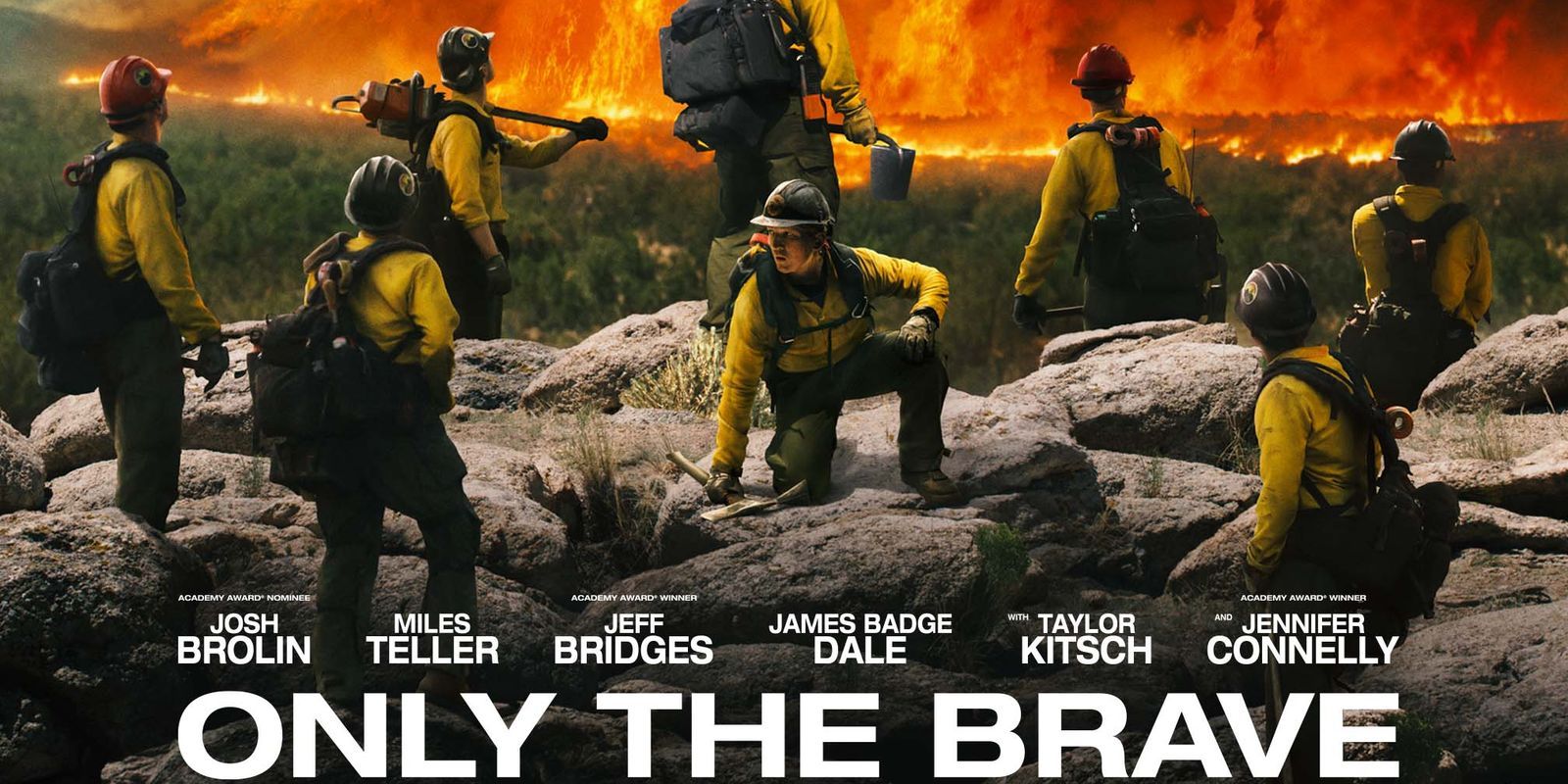
Only The Brave


This review may contain spoilers!

This film is led strongly by a brilliant leading cast who present a charged and moving emotional film. I would give Only The Brave an 8/10.

This is a film about the bond between people in a very dangerous yet rewarding profession, the Granite Mountain Hotshots aren't merely a band of brothers, they are a family in every way that counts. I like how the film doesn't show these strong connections very clearly at first, choosing instead to slowly present the bonds formed in a way that feels natural and makes you like each of the characters for different reasons. The characters of Eric and Brendan have a great mentor/mentee relationship and you can see the challenges each has faced as a recovering drug addict emerging throughout the film. Furthermore, the strain of being in a relationship with a man who seems more dedicated to placing himself into dangerous situations is presented in a very compelling subplot involving the character of Amanda. The Yarnell Hill Fire is a real horror to watch onscreen, it's a very powerful moment of death where characters you have come to care for are snatched up in what is a very tough long sequence to watch but what also makes the film so compelling. The cinematography of the film looks really nice, often taking advantage of the expansive settings that the feature takes place in; the film clearly knows exactly where to capture a powerful moment and convey this to the audience. The score for the film is undoubtedly very powerful and moving often lending a bit of reflection after an exciting or tense moment, yet it is the soundtrack in the film which really grounds the setting and tone of many scenes, with Jeff Bridges singing "(Ghost) Rider in the Sky" being one of the more memorable moments for me.

Miles Teller, who played Brendan McDonough, presents a very vulnerable role who is looking for redemption quite well; Teller crafts a character who is humbled in the eyes of the audience and has a great bond with the rest of the cast. Jeff Bridges, who played Duane Steinbrink, is a very gruff figure at first but is quite clearly the heart of the film; Bridges builds a character who is almost the pillar of support for the other major cast of characters. Jennifer Connelly, who played Amanda Marsh, develops quite a frustrated female protagonist who is not satisfied with the current state of her life; the very real yet emotional strain developed between herself and Brolin is very powerful to watch. James Badge Dale, who played Jesse Steed, is very clearly a charismatic leader within the film; Dale has a tough outlook upon moments of action within the film and guides the cast in a way that complements Brolin's role well. Taylor Kitsch, who played Christopher Mackenzie, is very convincing as the rude, crude and blunt character when first we meet him; yet Kitsch does a great job at developing his role's relationship to other and turning what was once rude dialogue to a more charismatic and entertaining sense of humour.

However, the best performance came from Josh Brolin, who played Eric Marsh. Brolin presents Marsh as quite a stoic individual who struggles to outwardly express how he feels emotionally, yet this is a subtle struggle Brolin performs incredibly well. The real sense of dedication, camaraderie and care that roots this figure as a true leader in the eyes of the Granite Mountain Hotrods emerges very strongly as an aspect of this performance. Brolin knows how to balance the careful chemistry he forms with several of the cast members to know when to allow others to take centre-stage and when to make a strong emotional impact from the relationships he has formed. Brolin also does a great job of showing the more erratic side of Marsh, sudden outbursts and changes in demeanour make this a fascinating display of acting.

This is a film that suffers strongly from poor pacing, often moving between a very heated and tense moment to a point with very little energy; this had the unfortunate effect of making it feel as if the feature had very little story to tell. The editing of the film didn't aid matters much in this area, with the cutting used throughout favouring a slow and gradual style.

Ben Hardy, who played Wade Parker, is quite the contrast to Teller's role and could have been used to great effect given more screen time; sadly Hardy isn't really developed much more after his introduction which disappoints greatly. Natalie Hall, who played Natalie Johnson, is intriguing as the jilted ex-girlfriend of Teller's role but is only given a stereotypical mould to work with; Hall doesn't go to great lengths to push the boundaries with her character and plays the role in a way that isn't exactly unique. Forrest Fyre, who played Mayor Worthington, is certainly a quirky character but doesn't add much else to the plot; Fyre is used so often for comedic effect that you don't really believe him when he tries to act in a serious manner.


Saturday, 11 November 2017

Murder On The Orient Express


This review may contain spoilers!

This film is a rather lazily written attempt at recapturing one of the most famous crime/mystery stories of all time. I would give Murder On The Orient Express a 4/10.

This film is whimsical at the best of times, the central character of Poirot is allowed his moments of witticism which lends the film a much needed lighter tone if key places. In regards to the overall tone of the film, there is a great element of mystery established which has you guessing and wondering as an audience member; the successful portrayal of this tone allows for some great cast performances to really shine through in key scenes. The cinematography of the film looks incredibly good; often beautiful shots of the setting are exquisitely captured, while tight scrutinous interrogation scenes are framed up nicely.

Kenneth Branagh, who played Hercule Poirot, makes for a charming lead performance; Branagh really brings forth the more unique qualities of Poirot and develops an interesting internal struggle for the role. Tom Bateman, who played Bouc, is quite an entertaining host/sidekick to Branagh's Poirot; Bateman acts in equal measure an inquisitive audience voice and a debauched man of pleasure. Manuel Garcia-Rulfo, who played Biniamino Marquez, is quite the charismatic presence within the cast; while spinning complete lies and fabrication you can't help but enjoy and grow to like Garcia-Rulfo's minor role. Derek Jacobi, who played Edward Henry Masterman, is convincing as the mild-mannered elderly servant; Jacobi has a nice blunt side to his role which leads to some entertaining curt exchanges between himself, Branagh and Depp. Michelle Pfeiffer, who played Caroline Hubbard, lands the duality of her role perfectly; you at times both believe Pfeiffer as the bubbly widow and are immediately hooked when she is revealed to be the vengeance-driven murderer. Willem Dafoe, who played Gerhard Hardman, brings forth one of the better performances in the film; only Dafoe could create a nasty racist professor and strip that persona away to reveal a rather soft-spoken likeable detective character.

However, the best performance came from Johnny Depp, who played Edward Ratchett. In recent years I feel Depp has taken on many franchise roles that have never really been too serious and he hasn't taken a role to really put himself into it. However, Depp as Ratchett is one of the finest performances I've seen from Depp in recent years and I have to say it's a shame he wasn't in the film for longer than he was. There is a very sinister presence about the role when first we meet him, he is incredibly caged and seems like he could turn violent at a moment's notice. Yet Depp does a great job of slowly revealing his character to be much more of a vulnerable role, frightened of the very people around him. This all culminates perfectly in the great exchange between Depp and Branagh where we see some of the acting that sets the bar for the rest of the film.

This is a film that has a slow pace throughout and doesn't lend itself well to making much of an impact, while major plot revelations succeed they don't always feel as important as they should. Sadly, the main protagonist for the film is set up to be quirky and somewhat light-hearted at first; so when the plot takes a darker turn the transition is hard to buy into as an audience member. The ending for the film is a major weak point with the famous revelation that all the passengers are behind the murder coming off as lazy writing. The major reveal feels this way because the Cassetti backstory and the current murder mystery feel very crudely blended together so that you aren't really satisfied with what comes off as a final moment of indecision by the screenwriter. Furthermore, the overall moral message of the feature, which sees the killers walk free, doesn't really sit comfortably with a modern audience and will leave you questioning if this was an adaptation made with it's audience in mind at all. The editing moves the film along at an agonising pace, far too often the feature is filled with scenic shots to block out heavy swathes of time between scenes. The score for the film is utterly forgettable, leaving the feature to craft atmosphere upon it's own and without the usual support of this film technique.

Daisy Ridley, who played Miss Mary Debenham, reveals that beyond her role in Star Wars, she doesn't lend much range to a character; Ridley is unable to present a very expressive performance and winds up being rather boring to watch. Leslie Odom Jr., who played Dr. Arbuthnot, feels a bit too committed to the self-righteous angle of his role; Odom Jr. tends to play his role one of two ways: stern indifference or exaggerated rage. Penelope Cruz, who played Pilar Estravados, feels constantly out of place alongside the rest of this cast; Cruz is incapable of truly connecting with the religious component of her character's role in a manner which doesn't seem far-fetched. Josh Gad, who played Hector MacQueen, doesn't really fit such a stern, serious role and seems out of place at best; Gad doesn't really feel connected to Depp's character either, an annoying quality considering the pair apparently work together. Sergei Polunin and Lucy Boynton, who played Count Rudolph Andrenyi and Countess Elena Andrenyi respectively, provide some of the worst performances of the film; this pair have a chemistry that feels artificial and Polunin in particular makes it look like effort to perform a role. Marwan Kenzari, who played Pierre Michel, is first portrayed as a minor role and should have remained so; when lent extra importance to the plot it becomes clear just how much Kenzari fell into the background. Judi Dench, who played Princess Dragomiroff, has fallen into a typecast trend recently that has done her no favours; an arrogant character to watch who is often notably the tired, forgetful role that Dench seems to have taken a fondness to. Olivia Colman, who played Hildegarde Schmidt, is yet another great performer who feels little more than a background performance; Colman is wasted as a dithering slapstick tag-along to Dench's ailing performance.

Thursday, 26 October 2017

Thor: Ragnarok


This review may contain spoilers!

This is without a doubt the worst Thor film yet and has to be one of the worst films Marvel has produced thus far. I would give Thor: Ragnarok a 6/10.

This is very much a well-crafted spectacle film, with big battles and an entertaining comedic tone. The humour used initially changes is a breath of fresh air for the Thor films, there are great references at the expense of past films or jokes that come quite unexpectedly and enhance select scenes. The first half of the film really knows how to set high stakes with several key characters from past films being killed off, great cameos from other Marvel universe roles and a clever build to the much anticipated Thor/Hulk fight. The cinematography of the film feels like it is always being set up for a punchline, generally making an impact and detailing combat sequences quite well. The special effects within the film look good for the most part; the CGI characters such as Hulk or Miek look great, yet it is the lightning effects generated around Thor throughout the film which really impresses. The score for the film is really what sets this film apart, having a sound unlike any film coming out at the moment; the use of Led Zeppelin's 'Immigrant Song' for key fight scenes works to great effect too.

Chris Hemsworth, who played Thor, looks like he's having a ton of fun throughout the film which comes through in his performance; Hemsworth is clearly dedicated to this new style of storytelling and he puts a lot of effort into blending the serious and comedic aspects of Thor together for Ragnarok. Tom Hiddleston, who played Loki, embraces his role's title as the God of Mischief in this feature; Hiddleston plays a more harmless, conniving character who still maintains a firm brotherly bond with Hemsworth. Jeff Goldblum, who played Grandmaster, is one of the finer additions to the MCU thus far; Goldblum's wit really shines through in this role and he creates quite an ego-centric yet hilarious character. Tessa Thompson, who played Valkyrie, really introduces her character quite well; Thompson establishes a reluctant protagonist who's at least as tough as her co-star, Hemsworth. Benedict Cumberbatch, who played Doctor Strange, makes for a nice appearance and change in tone within this film; Cumberbatch has a nice sarcastic barb in how he delivers Strange this time which really makes this scene a little unexpected in its execution. Clancy Brown, who voiced Surtur, brings forth the strongest and most convincing antagonist of the film; Brown's voice acting performance is the only character that makes you feel threatened and makes you believe that something dangerous is about to unfold. Luke Hemsworth, Sam Neill and Matt Damon, who played Actor Thor, Actor Odin and Actor Loki respectively, all manage to deliver one of the funniest scenes in the film between them; in particular Damon's parody of Hiddleston's 'death' from Thor: The Dark World leaves quite the impression.

However, the best performance came from Anthony Hopkins, who played Odin. Hopkins is what this film needed in a big way, often grounding scenes and reminding us that this is, in fact, a Thor film. The slapstick humour that comes off as alien and new is incredibly absent in Hopkins' performance, instead, he presents the mythic nature of these characters incredibly well. Even in scenes where Hopkins is portraying an impersonation of his role you are entertained by how sly he is in how he mirrors Hiddleston. The emotionally charged scenes in which Hopkins gets to spend with his sons and farewell them before his departure are incredibly moving and a league beyond the rest of the film. Hopkins enters the feature to remind the audience what we should expect from a Thor film and not what we should settle for.

This is a fun film and is a nice blockbuster spectacle to watch as noted above but it lacks substance and doesn't place itself well as a sequel. The film's comedic tone is a risk and one that certainly doesn't pay off as the film progresses, suddenly jokes get repeated and the nature of the comedy grows cruder and more cringeworthy. The pacing for the feature is very poorly aligned, with the first act introducing or tying up so many plotlines in such a short span of time that by the time the film hits act two and slows right down you feel quite startled by the change in pace. The large supporting cast of characters don't lend a great deal to the story, often entire chunks of this film could be cut away and you'd wind up with a very similar, albeit shorter product. The comedic presentation of this film changes everything and suddenly these aren't mythic roles nor is there even a serious undertone like there was in some of the past Thor films, now it feels like very little has successfully carried over and the characters that had already been established changed for the worse. Overall, the big message behind Thor: Ragnarok is that Asgard is not a place, but a people yet in a film that spends the majority of the feature away from Asgard I don't know how I could have ever been convinced this was a success.

Cate Blanchett, who played Hela, has to be one of the worst Marvel antagonists yet; Blanchett's long dull expositionary monologues grow hard to bear and it became clear that the writers didn't really know what to do with her before the big final battle. Idris Elba, who played Heimdall, is woefully underused throughout Ragnarok; Elba is demoted to meek defender of Asgard in absentia of Thor and falls into the background even when he reappears for the final battle. Karl Urban, who played Skurge, is more accurately a scourge upon this entire film; Urban's horrible accent and meaningless role take up far too much screen time throughout the film. Mark Ruffalo, who played Bruce Banner, wanders about the set with a wondrous gaze providing little to the film and looking like a new performer stepping through his first performance; Ruffalo merely proves that Hulk has no reason to even be in Ragnarok beyond punching things, making the entire Hulk arc in this film resoundingly redundant. Taika Waititi, who played Korg, is about as lazy an actor as he is a director clearly; not only does he do nothing to lend character to his voice but this comes off as an ego-driven self-insert. Rachel House, who played Topaz, is probably the worst performance in the cast; House lends no emotion to her scenes and certainly lacks chemistry with every performer she shares a scene with. Tadanobu Asano, Ray Stevenson and Zachary Levi, who played Hogun, Volstagg and Fandral respectively. provide impact by being killed off but could have at least been given the opportunity to properly farewell the characters; the way these characters are used merely demonstrates how little respect Waititi and the creative team have for the past Thor films.

Wednesday, 25 October 2017

Geostorm


This review may contain spoilers!

What I expected to be another dull disaster film surprised me by becoming an interesting climate change conspiracy flick. I would give Geostorm a 7.5/10.

This is a blockbuster film which isn't ashamed to have a lot of fun with itself while also doing something unique with the usual disaster film genre. The entire premise is a space station which has the ability to monitor and control the Earth's climate; a little outlandish but once you're onboard with the environmental Big Brother then you'll get quite a lot out of Geostorm. The narrative unfolds around an investigation as to why the space station is malfunctioning and causing random natural disasters to strike the unwitting populace below. What unfolds is a web of political intrigue and espionage that is quite unexpected from the usual disaster film. It doesn't ever take itself too seriously but uses the blockbuster formula to tell a story that is different and shows a creative spark that not many blockbuster films manage these days. The cinematography is stunning; whether that be giant shots of oncoming disaster, dimly lit political dialogue scenes or free-floating shots set in space the camera work is fantastic. The special effects within the film are phenomenal, with a greater aspect of the feature being set in space while there are multiple natural disasters that look very threatening.

Gerard Butler, who played Jake Lawson, does a great job as one of the film's two leading protagonists; Butler's gruff exterior sets barriers between himself and the rest of the characters but makes the relationships he formed all the more satisfying. Jim Sturgess, who played Max Lawson, is a really intriguing protagonist within this film; Sturgess' desperate moral figure set against the political American landscape makes for quite the compassionate role. Abbie Cornish, who played Sarah Wilson, was very cool as the tough-as-nails Secret Service agent; Cornish depicts the conflict her character goes through of balancing her professional and personal life really well. Alexandra Maria Lara, who played Ute Fassbinder, is a quiet yet firm leader within the space station setting of the film; Lara is perfect at playing a kind, self-sacrificing person who is often the heart of the film. Eugenio Derbez, Amr Waked, Adepero Oduye and Robert Sheehan, who played Al Hernandez, Ray Dusette, Eni Adisa and Duncan Taylor respectively, all operated quite well as the hesitant research team working alongside Butler and Fassbinder; Sheehan in particular suited the greedy and narcissistic traitorous antagonist. Andy Garcia, who played President Andrew Palma, is astern yet fair figure throughout the feature; I liked how this role's status was often used to comedic effect in some of the more intense scenes. Ed Harris, who played Leonard Dekkom, has a nice charismatic mentor bond with Sturgess in this film which makes his reveal as the antagonist quite exciting; Harris is a hardened role with the ability to add a great deal of spite to a character.

However, the best performance came from Zazie Beetz, who played Dana. This role is one of the best comedic performances featured in the film and provides a lot of the levity which makes Geostorm such a joy to watch. I liked how she portrayed a hacker role that wasn't very stereotypical, yet still maintained a cocky and self-assured attitude about herself. Her on-screen chemistry with Sturgess presented quite a fun friendship; her teasing, mocking persona grating against the serious attitude Sturgess tried to maintain. Beetz is a real delight in this film and will have you laughing out loud with her easy and fun delivery.

This film does stray too far into the disaster film territory from time to time, with monolithic disaster sequences feeling more like filler content than moments of excitement within the film. Furthermore, the cheesy ending which saw two protagonists escape death in a way that felt quite forced was difficult to find satisfaction in. The moral of Geostorm came off as quite heavy-handed, least of which because it was narrated to us in a very cringeworthy monologue by feature's end. The score of the film was practically absent, there were portions when the music swelled with the danger but it was clear the score was neither unique nor crafted to the film.

Daniel Wu, who played Cheng Long, feels like a detached component of the film; his relationship with Sturgess is flimsy in its portrayal and his death is predictable from the start. Talitha Eliana Bateman, who played Hannah Lawson, feels like she is often speaking with the voice of the writer as opposed to speaking like a child; Bateman deals outlines in a way that is often quite exaggerated and ends the film on quite the weak note. David S. Lee, who played Rico, is little more than a gunman/henchmen generic role; Lee has no opp\ortunity to delve into his role as a character which makes him feel boring to watch.